Converged physical and cyber security
Converged Security Solutions Provider for Businesses and Government Entities
Converged security solutions run your cameras, access control, alarms, intercoms, network, identity and cybersecurity as one program: one plan, one set of controls and one incident response. BTI designs, installs, secures and supports the whole stack, so the gaps between your security vendors and your IT team stop being the way in.
One accountable integrator, installer and service partner for video surveillance, access control, intrusion, networks and cybersecurity, backed by over 40 years in business.
- Over 40 Years in Business
- ISO 27001 Compliant
- SOC 2 NOC/SOC
- Authorized and Certified Axis Gold Partner
- Cisco Select Partner
- GSA contract holder (47QTCA21D00BA)
- CMAS and TESMA contract awardee (California)
- ISNetworld member
- Licensed Alarm Company Operator
- 98%Client retention
- 10,000+Alerts handled, zero missed
Converged Security Delivery from BTI: Watch the Video
Video summary: Founder Eric Brackett explains why mid-market companies, and the firms that contract with them, inherit cybersecurity and data-privacy liability, and how BTI acts as one accountable managed and co-managed provider for healthcare, logistics, manufacturing, education, financial services and government organizations in California, Arizona and Illinois.
What Converged Security Means, in Plain Terms
Converged security, also called security convergence, treats physical security and cybersecurity as one program instead of separate projects owned by separate vendors. Everything that protects your people, buildings and data is designed together, secured together, monitored together and answered together:
- Cameras: commercial security camera systems, recorders and video management software.
- Access control: doors, readers, credentials and controllers, from business access control solutions to cloud-based access control.
- Alarms: commercial intrusion alarm installation and Alarm.com for business.
- Intercoms and visitor entry: Axis network intercoms tied to door access and video.
- Network: the switches, Wi-Fi, firewalls and segments every device rides on, covered by network security and SASE.
- Identity: the accounts, badges and MFA that decide who gets in, covered by identity, MFA and device security.
- Cyber monitoring: logs, alerts and response from a 24/7 converged security NOC/SOC.
Instead of a camera vendor, a door vendor, an alarm company and an IT provider each owning one piece, one team designs it, hardens it, watches it and answers for it. For a longer explainer, read what security convergence is and why it matters.
Why Converged Facility and Cyber Security Matters Now
Every security device is a network device
IP cameras, recorders, door controllers, alarm panels and intercoms run software and sit on your network. The common gaps are the same everywhere:
- Default or shared passwords
- Unpatched firmware
- Ports opened to the internet for remote viewing
- No logging of device and admin activity
- No MFA on remote portals
See cybersecurity best practices for IP cameras and door access control.
Identity is shared
The same person has a badge, a Microsoft 365 login and often a video or door system account. When someone changes roles or leaves, every one of those should change at the same time. When they are managed in separate systems by separate vendors, old badges and old admin accounts linger.
One incident needs one response
A door forced open at the same time as an unusual login, a camera going offline before a server room door opens, ransomware reaching a recording server: each is a minor alert on its own. Converged security puts them in one incident process with one owner. See how to build a cyber incident response plan.
The federal Cybersecurity and Infrastructure Security Agency has published convergence guidance that describes the risks of siloed security functions and a framework for aligning them. BTI is not affiliated with or endorsed by CISA. For the most common weak points we find in the field, read closing the cyber gaps in converged IT and physical security.
What BTI Delivers as Your Converged Security Integrator and Installer
As a converged security company, BTI designs, installs and supports both sides of the program. Our converged security services cover converged infrastructure security integration from the camera and the door to the firewall, the identity platform and the monitoring behind them.
Secure device deployment and hardening
Default passwords changed, unique admin accounts, unused services turned off and encrypted connections enabled where the device supports them. When your contracts require it, we specify cameras and recorders that meet NDAA compliance requirements for security cameras.
Segmentation and VLANs for security devices
Cameras, door controllers, alarm panels and intercoms go on their own VLANs with firewall rules, so a compromised camera cannot reach business systems. Remote viewing is designed without open inbound ports. The network underneath is built with business network design, network installation services and Meraki MX firewalls and SD-WAN.
Identity and access tied to HR and Microsoft 365
Named accounts, role-based permissions and MFA where the platform supports it. Where your access control platform integrates with Microsoft Entra ID or your HR system, badges and door permissions can be granted and removed with the user account, so a departing employee loses door access and system access together.
Monitoring and correlation, where integrated
24/7 system health and alert monitoring available, plus a 24/7 converged security NOC/SOC. Cameras and door controllers do not run security agents, so where integrated, selected device events such as authentication events, a door forced open or a camera tamper can be forwarded to a managed SIEM and correlated with network and identity activity, with managed detection and response for servers and endpoints.
Lifecycle and firmware management
Camera, controller and recorder firmware tracked and updated on a schedule, and video and access control servers patched in planned maintenance windows so recording and door control are not interrupted. Device health and support run through GlobalView support for physical security systems, with server patching under managed patching and vulnerability management.
One support model for IT and security
BTI brings network infrastructure, managed IT services, cybersecurity, video surveillance, access control and alarm systems under one support model, fully managed or co-managed with your IT team. See bundled IT and security pricing for typical per-user ranges. Ongoing care runs through GlobalView managed security system support, and projects start with security system integration. Critical video and access control servers can be covered by hot standby disaster recovery.
How We Engage: Assess, Design, Deploy, Manage
Assess
A converged security assessment of your cameras, doors, alarms, intercoms, network, identity platform and remote access, with a plain-language list of gaps. For the cyber side on its own, start with a free cybersecurity assessment.
Design
A written design and itemized proposal: device placement, segmentation, identity integration, monitoring scope and what happens to the equipment you already own.
Deploy
Installation, hardening and cutover by BTI engineers, scheduled site by site to keep recording and door control running.
Manage
Firmware and patching, health and alert monitoring, access reviews, change records and reporting, with one team accountable for both sides.
The BTI National Security Pyramid with AI Governance
Converged security sits on the same five layers BTI uses for all of its cybersecurity services. Most organizations start with the essentials at the bottom and add layers as their risk, contracts and insurance requirements grow. The italic line in each layer shows how it applies to cameras, doors and alarms.
Layer 5: Governance and compliance
Risk management, compliance alignment and long-term resilience.
- virtual CISO (vCISO)
- policy and control mapping
- BCDR planning
- Data privacy tools
- AI security and governance: shadow AI discovery and AI in identity and employee lifecycle management
Physical controls such as door access reviews and video retention are written into the same policies.
Layer 4: Proactive testing and prevention
Test your defenses, find gaps and prepare for audits.
- penetration testing with Recurring Security Testing
- Vulnerability management
- SIEM and SaaS monitoring with the 24/7 NOC/SOC
- Data classification
- Risk assessments
Security systems are included in the risk assessment and the device inventory.
Layer 3: Advanced detection and control
Visibility, threat prevention and fewer employee mistakes.
- Web filtering
- Dark web alerts
- Email encryption
- Device control
- Phishing tests
Device and admin activity on security systems is logged where the platform supports it.
Layer 2: Strengthened defense
Tools that reduce internal risk and support continuity.
- Firewall and VPN
- MDR with the 24/7 NOC/SOC
- DNS filtering and website security
- Encrypted backup
- Security training
Security devices are segmented on their own VLANs behind firewall rules.
Layer 1: Essential safeguards
Basic protections every organization needs.
- endpoint protection (EDR)
- Patching
- MFA
- email security and awareness training
- Microsoft 365 hardening
- Cloud and local backup
- Basic user policies
Default passwords changed and firmware kept current on cameras, controllers and panels.
Compliance and Cyber Insurance Alignment
Auditors, assessors and insurers now ask about physical access and connected devices, not only laptops and email. A converged program gives you the controls and the records to answer: device inventories, segmentation diagrams, access reviews, firmware and patch history, and incident procedures. BTI's own processes are ISO 27001 compliant.
We map those controls to the frameworks your organization works under, such as the NIST Cybersecurity Framework, PCI DSS and the questions on cyber insurance applications. CMMC and other compliance work is completed and contracted by BTI and its partners, including top industry professionals in each category. BTI provides controls and evidence; it does not guarantee a certification, an audit result or an insurance outcome. Those decisions belong to your auditor, assessor or carrier. See IT compliance services and cyber insurance readiness.
Converged Security Platforms We Design, Install and Support
Video and analytics
- Axis Communications: Authorized and Certified Axis Gold Partner, including AXIS Camera Station
- Avigilon Unity video surveillance (authorized and certified)
- OpenEye cloud and hybrid video
- YourSix cloud video
- cloud video surveillance and video analytics software
Access control, alarms and the network
- Axis access control to unify doors and video
- Avigilon Alta (formerly Openpath) cloud access control
- Brivo access control: BTI designs, sells, installs, supports and takes over existing Brivo accounts
- Kantech EntraPass: Kantech Global Edition Certified Partner
- Alarm.com commercial intrusion, video and access
- Cisco Meraki networking: Cisco Select Partner
Thermal and Radar for Solar and Critical Infrastructure
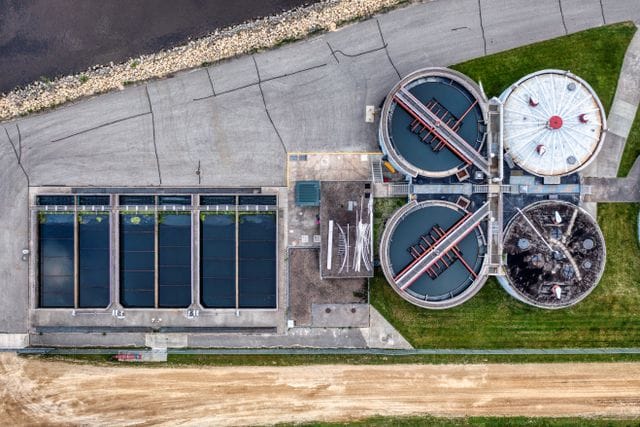
For solar farms, water and utility facilities and other remote sites, BTI designs perimeter intrusion detection with thermal cameras and radar, integrated with video management, with alarm events that can be correlated with your network and cyber alerts where integrated. Remote sites usually mix operational technology with the security network, so segmentation and remote access get the same attention as the cameras. See critical infrastructure security systems, critical infrastructure cybersecurity, IoT and OT security services and our Milestone XProtect AI and open VMS converged security guide.
Converged Security for the Industries We Serve Most
Healthcare
Medical groups, PACE programs, behavioral health, pharmacies and dental practices, where door access, video and patient data all need protecting. See healthcare cybersecurity.
Manufacturing
Plants where cameras, badge readers and production systems share a network that must stay up. See our Cisco Meraki guide for manufacturing and logistics.
Logistics and warehousing
Docks, yards, gates and distribution centers across multiple sites. See logistics cybersecurity.
Financial and professional services
CPA, tax, title, insurance and other professional offices that hold sensitive client files. See cybersecurity for financial and professional services.
Education
Campus video, lockdown-ready doors and the student and staff networks behind them. See education cybersecurity.
Government
City, county and public agency facilities, with procurement through BTI's GSA contract and California CMAS and TESMA awards. See government cybersecurity.
Security Systems by Industry
Video, access control and alarm systems designed around the risks and rules of your industry.
-

Healthcare
Video, access control and panic alerting for clinics, medical offices and multi-site groups.
Healthcare security systems → -
Government & Public Sector
Cameras, door access and visitor management for city, county and public agency buildings.
Government security systems → -
Education
Campus video, lockdown-ready door access and visitor screening for schools and colleges.
School and campus security systems → -
Manufacturing
Plant perimeter, loading dock and production floor video with access control by shift.
Manufacturing security systems → -
Logistics & Warehousing
Dock, yard and gate cameras plus access control for warehouses, DCs and 3PLs.
Warehouse and logistics security systems → -
Financial Services
Video and access control for CPA, tax, title and insurance offices that hold sensitive client files.
Security systems for CPA and insurance firms → -
Utilities & Critical Infrastructure
Perimeter video, remote site access and intrusion alarms for water and utility facilities.
Water utility and critical infrastructure security systems → -
Construction
Job site cameras and gate access that help deter theft and vandalism after hours.
Construction site security cameras → -
Nonprofits & Faith-Based
Cameras, door access and alerts that help keep services, schools and offices safe.
Church and nonprofit security systems → -
Parking & Entertainment Venues
Garage cameras, license plate recognition and access control for parking and event venues.
Parking garage and venue security systems →









Licensed, Contracted and Vetted
Licensed
- Licensed Alarm Company Operator
- Illinois 127.001638
- Arizona BTR 22913-0 · Arizona ROC 331189 C-67
Contracted
- GSA contract holder (47QTCA21D00BA)
- CMAS and TESMA contract awardee (California)
Vetted
- ISO 27001 compliant
- 24/7 NOC/SOC
- ISNetworld member
Converged Security in Los Angeles, Chicago and Phoenix
BTI serves organizations nationwide from three offices, with local engineers for installation and on-site support.
Los Angeles and Southern California
Office hours Monday to Friday, 7:30 AM to 4:30 PM, with 24-hour support at 800-435-7284.
Chicago and Chicagoland
Office hours Monday to Friday, 8:00 AM to 5:00 PM.
Phoenix and Arizona
Support 24/7.
Explore all business security systems or the full cybersecurity FAQs.
Converged Security FAQs
What is converged security?
Converged security, or security convergence, runs physical security (cameras, access control, alarms and intercoms) and cybersecurity (network, identity and monitoring) as one program, with one plan, one set of controls and one incident response, so threats that cross between the building and the network are caught and handled together.
Why are security cameras and door controllers a cyber risk?
They are network devices that run software. Default passwords, unpatched firmware, ports opened for remote viewing and missing MFA on remote portals can give an attacker a way into the rest of your network, or let someone tamper with video or doors.
Does BTI's NOC/SOC monitor our cameras and door controllers?
Cameras, door controllers and sensors do not run security agents. 24/7 system health and alert monitoring is available for them, plus a 24/7 converged security NOC/SOC. Where integrated, selected device events can be forwarded to a SIEM and correlated with network and identity activity.
Can BTI secure the security system we already have?
Often, yes. A converged security assessment reviews your current cameras, doors, alarms, intercoms, network and identity setup, then recommends what to harden, segment, patch, upgrade or replace.
Can door access be tied to Microsoft 365 or our HR system?
Where the access control platform supports it, yes. Badges and door permissions can be granted and removed together with the user account in Microsoft Entra ID or your HR system, so a departing employee loses building and system access at the same time.
Does converged security help with compliance and cyber insurance?
It gives you the controls and records auditors and insurers ask for, such as device inventories, segmentation, access reviews and patch history. BTI provides controls and evidence; your auditor, assessor or carrier makes the final determination, and no certification or coverage outcome is guaranteed.
Do CISA and DHS recommend converged security?
CISA, part of the Department of Homeland Security, has published convergence guidance that encourages organizations to align their cyber and physical security functions. BTI is not affiliated with or endorsed by CISA or DHS.
Which contract vehicles and licenses does BTI hold?
BTI is a GSA contract holder (47QTCA21D00BA) and a CMAS and TESMA contract awardee (California). BTI is a Licensed Alarm Company Operator and holds Illinois license 127.001638 and Arizona BTR 22913-0 and ROC 331189 C-67.
Secure Everything: Cyber, Physical and Beyond
Talk with a BTI converged security engineer about design, installation, hardening, monitoring and support for your sites.
Request a Converged Security Assessment
Tell us about your sites, cameras, doors, alarms and network. A BTI security engineer will follow up with next steps and a plain-language view of where the gaps are.
- Serving organizations for over 40 years
- ISO 27001 compliant · GSA · CMAS & TESMA (CA)
- ACO licensed in CA, AZ & IL
Call 800-HELP-BTI (800-435-7284)
LA 562-298-5000 · Chicago 312-432-5300 · Phoenix 602-733-6807