Over 40 Years in BusinessISO 27001 compliantPublic sector: GSA contract holder
LA 562-298-5000 · Chicagoland 312-432-5300 · Phoenix 602-733-6807 · Client Support
BTI Communications Group, LTD. is a commercial security integrator with offices in Santa Fe Springs, Downers Grove and Phoenix, in business for over 40 years. We install access control for medical groups, clinics, dental offices, pharmacies and behavioral health practices, from front desks and exam corridors to medication and records rooms, on Brivo, Avigilon, Kantech, RS2 (Acre) or Axis.
Requirements
Recommended setup
A medical office design separates the patient side of the building from the clinical side, then adds tighter rules for medication, records and IT rooms.
Main entry, waiting room door, exam corridors, lab, medication room, records room, IT closet and staff entrance, each on its own schedule.
Mobile credentials or badges for staff, with temporary credentials that expire for locums, students and agency staff.
Readers with keypads for two-factor entry at medication and records rooms, and standard readers elsewhere.
Electric strikes and electrified locks that allow free egress, with fail-secure locking on medication rooms.
A desk button or software unlock with a video intercom so staff see who is at the door before buzzing them in.
Axis or Avigilon video at entries and medication room doors.
Staff provisioning from your HR or identity directory and alarm arming when the last person leaves.
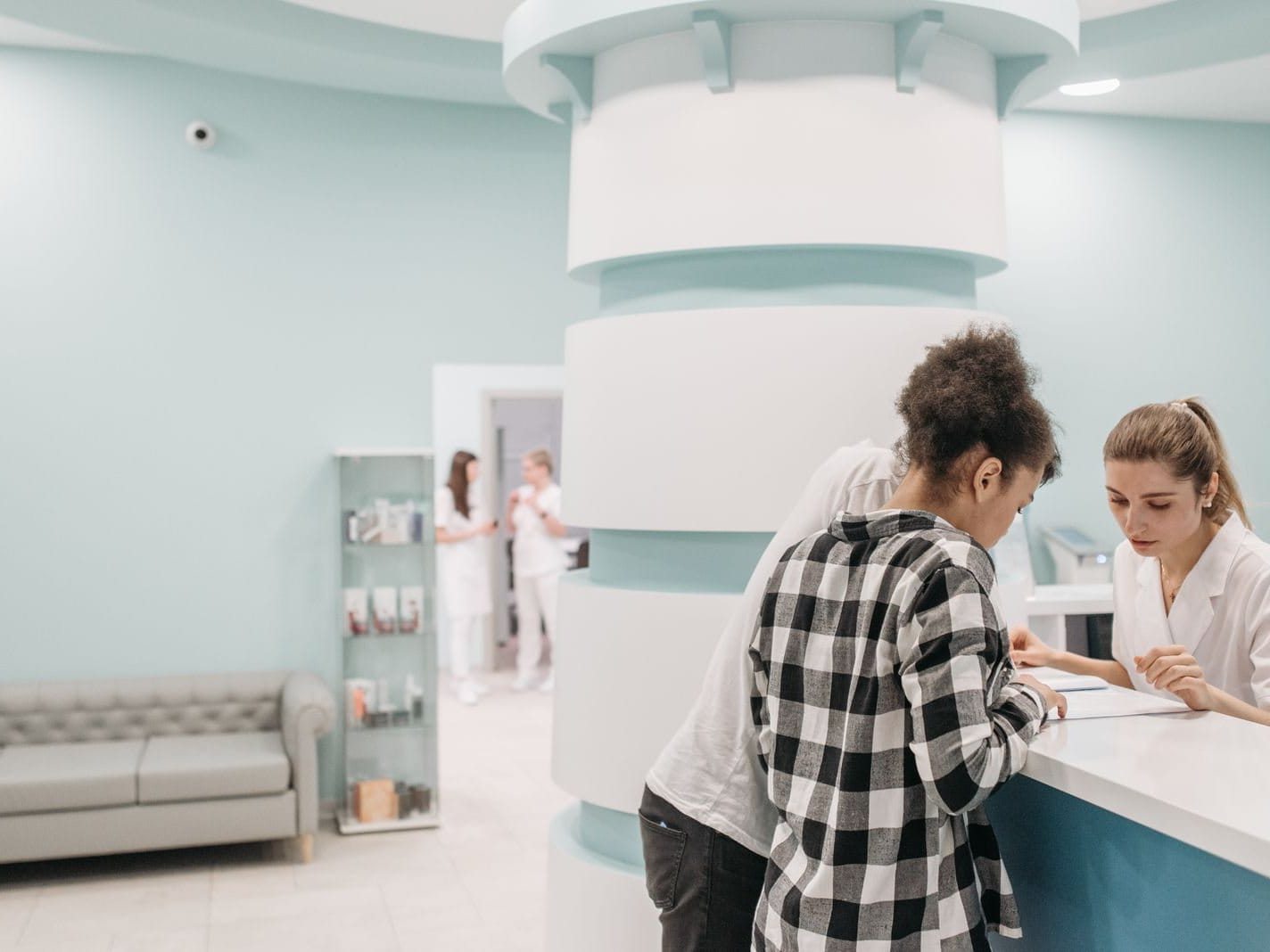
The front desk is the pinch point in most clinics. BTI puts the door between the waiting room and the exam corridor on a reader that staff badge through, with a desk release and video intercom so the receptionist can let a patient back without walking over. The main entry follows clinic hours and locks itself at close, holidays included.
After hours, the staff entrance becomes the only way in, and every entry is tied to a name. Early lab draws, late procedures and cleaning crews each get their own schedule, so the system matches how the practice actually runs instead of one master key on a ring.
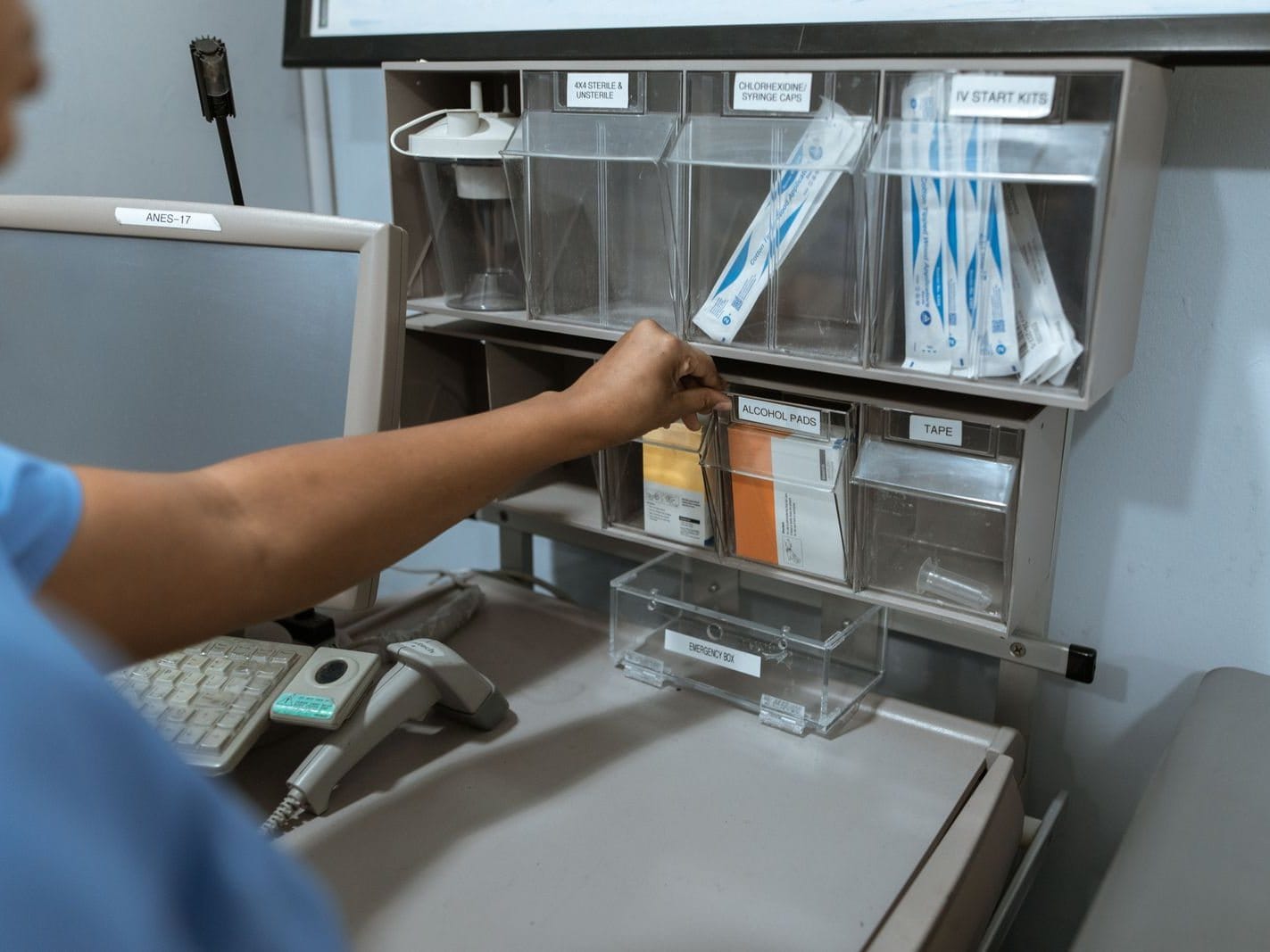
Federal DEA rules require practitioners to keep controlled substances in a securely locked, substantially constructed cabinet, and pharmacies carry their own storage and recordkeeping duties. Access control does not replace those cabinets and safes, but it controls and records who entered the room around them.
BTI typically puts medication rooms and pharmacy back rooms on two-factor readers (badge plus PIN), fail-secure hardware and a camera on the door. A report of every entry by person and time is a few clicks away when a count does not match or an inspector asks.
Behavioral health programs covered by 42 CFR Part 2 must keep formal policies for securing patient records, and access control gives those policies a log. PACE day centers often need doors that keep participants safe while still meeting egress rules, which BTI designs with the local building official where delayed egress is allowed.
Medical groups with many locations get one system for every clinic. A provider who moves between sites carries one credential, a departing employee loses access everywhere at once, and the practice manager sees every location on one screen.
Standards and compliance
The HIPAA Security Rule includes facility access controls at 45 CFR 164.310(a)(1): policies and procedures that limit physical access to systems holding electronic protected health information, and to the facilities that house them, while allowing authorized access. Access control is one of the main tools practices use to meet that standard.
| HIPAA facility access item | What access control provides |
|---|---|
| Facility security plan | A door schedule and zone map showing which roles can enter which rooms and when. |
| Access control and validation procedures | Role-based permissions, visitor check-in and a log of every entry by person, door and time. |
| Maintenance records | BTI service records for repairs and changes to readers, locks and doors. |
| Contingency operations | A documented plan for power loss and emergencies, with battery backup and emergency access procedures. |
| Workstation security (164.310(c)) | Restricted rooms for workstations and servers that display or store patient data. |
Access control logs and controls support your HIPAA risk analysis and audits. HIPAA compliance determinations stay with your organization and its compliance officer.
Platforms
BTI is platform agnostic and recommends the platform after the survey. HID readers and mobile credentials work across most of them. Not sure which fits? Read the commercial access control guide.
Cloud access control with web and mobile administration. Eagle Eye cloud video is part of Brivo.
Brivo access controlCloud managed doors with touchless mobile entry and remote unlock.
Avigilon Alta access controlOn-premises access control that runs alongside Avigilon video on servers you own.
Avigilon Unity access controlEntraPass software and KT controllers for owned, scalable systems.
Kantech access controlAccess It! software for larger, multi-site estates that want an owned platform.
RS2 access controlAxis door controllers, readers and network intercoms that tie straight into Axis video.
Axis access controlInstallation
Medical office projects are scheduled around clinic hours so patient care is never interrupted.
Medical office access control is quoted from a door by door survey. The number of openings, door and frame types, existing cabling, two-factor rooms, the platform and its licensing, and how many clinics share one system drive the proposal, which BTI itemizes line by line.
By city
Local engineers install and service these systems from each office.

Los Angeles County from the Santa Fe Springs office.
Access control in Los Angeles

Chicago, Cook and DuPage counties from the Downers Grove office.
Access control in Chicagoland

Maricopa and Pima counties from the Phoenix office.
Access control in Phoenix and TucsonIndustries
Video, alarms and access control for medical groups.
Lobby, suite, elevator and parking control for offices.

Production zones, shift credentials and contractor badges.

Docks, yards, gates and carrier check-in for 3PLs.

Secured entries and lockdown-ready doors for schools and colleges.

Public agency buildings and yards. GSA contract holder (47QTCA21D00BA).

Access control designed into new builds and tenant improvements.

Water, public works and server rooms with remote gate control.

CPA, title and insurance offices that protect client files.
Scheduled doors for ministries, campuses and community sites.
Proof
BTI Communications Group, LTD. designs, installs and supports access control for medical groups, clinics, dental offices, pharmacies and behavioral health practices from offices in Santa Fe Springs, Downers Grove and Phoenix, on Brivo, Avigilon Alta (formerly Openpath), Avigilon Unity, Kantech, RS2 (Acre) and Axis.
Yes. The HIPAA Security Rule's facility access controls standard (45 CFR 164.310(a)(1)) calls for limiting physical access to systems and rooms that hold patient data. Access control restricts those rooms by role and keeps a log of every entry, which supports your risk analysis and audits.
Keep controlled substances in the locked cabinet or safe DEA rules require, then put the room itself on a badge plus PIN reader with fail-secure hardware and a camera on the door, so every entry is tied to a person.
Yes. A desk release button or software unlock, paired with a video intercom, lets staff see who is at the door and buzz them in without leaving the desk.
Access control usually stores staff and visitor data, not patient health records. If your check-in process records patient information in the platform, review the vendor's business associate agreement with your compliance officer.
Yes. Cloud platforms such as Brivo and Avigilon Alta, and owned platforms such as Kantech and RS2 (Acre), manage many locations from one screen with one staff roster.
Yes. BTI designs, sells, installs, supports and takes over existing Brivo accounts, and also takes over Kantech, Avigilon and RS2 (Acre) systems without replacing hardware that still works.
Cost depends on the number of doors, door hardware, cabling, two-factor rooms, platform licensing and the number of locations. BTI provides an itemized proposal after a free site survey.
Tell us about your doors, people and schedules. An engineer replies within one business day.