Structured cabling is a standards-based system of copper and fiber cables, patch panels, and pathways that connects every network, phone, Wi-Fi, and security device in a building through organized telecom rooms. Built to ANSI/TIA-568 and ISO/IEC 11801 standards, it replaces tangled point-to-point wiring with a documented, testable infrastructure that is easier to troubleshoot and upgrade. Most new business installations today use Cat6A copper to devices and fiber between floors and buildings.
This guide explains what structured cabling is, what it looks like, the six subsystems, cable types (Cat5e, Cat6, Cat6A, fiber), low-voltage wiring for voice, security, and intercoms, when to hire a cabling installer, and the benefits.
The Ultimate Guide to Structured Cabling
A robust cabling foundation is essential for your IT and communication systems. Your Wi-Fi access points, phones, cameras, access control, and IT network all rely on it. Because cabling typically outlasts two or three generations of network equipment, the choices made during installation affect performance for 15 years or more.
What Is Structured Cabling?
Structured cabling, also called low-voltage wiring, network cabling, or IT structured cabling, is the practice of organizing and standardizing the cabling components of your network into a dependable, well-documented infrastructure. Designed thoughtfully, it ensures your network:
- Remains accessible and easy to troubleshoot
- Adapts to moves, additions, and changes
- Operates at its full rated capacity
- Is ready for future technologies such as Wi-Fi 7 and higher-power PoE

What Does Structured Cabling Look Like?
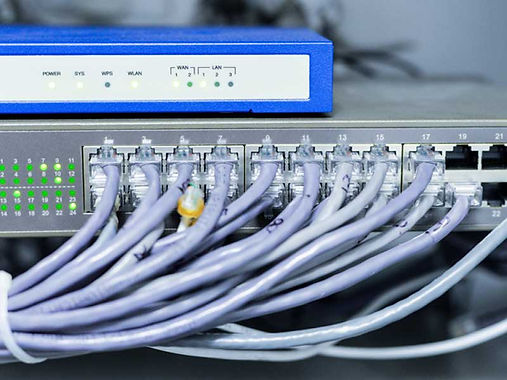
It helps to consider what structured cabling is not. In “point-to-point” cabling, patch cables run directly between pieces of hardware. It works at first, but it quickly becomes a tangle that is hard to trace and change.
Structured cabling instead uses patch panels and trunk cables. Equipment ports connect to a patch panel, often at the top of the rack, and that panel connects through permanent trunk or horizontal cabling to other panels in the main distribution area (MDA) or telecom rooms. All connections are accessible from central points, so moves, adds, and changes require only short patch cords.
How Does Structured Cabling Installation Work?
Design and installation follow industry standards that define cable types, distances, pathways, labeling, grounding, and testing for offices, data centers, and other buildings. The main standards bodies are ISO/IEC (ISO/IEC 11801), CENELEC (EN 50173, used in Europe), and the Telecommunications Industry Association (TIA) (ANSI/TIA-568 for cabling, TIA-569 for pathways, TIA-606 for labeling).
A typical project includes a site survey, design and drop counts, pathway and rack planning, installation, termination, certification testing of every link, labeling, and as-built documentation.
Types of Structured Cabling Subsystems
Structured cabling systems are made up of six subsystems, each with its own function and components.
Entrance Facilities
Where carrier and campus cables enter the building, including demarcation points, protection, and the transition to inside cabling.
Equipment Room
A centralized space for core switches, servers, and carrier equipment, often the main distribution area.
Backbone Cabling
Connections between the equipment room, telecom rooms, and buildings, usually fiber optic, plus copper for some voice applications.
Telecommunications Rooms and Enclosures
Closets (IDFs) on each floor or area where horizontal cabling terminates on patch panels and connects to access switches.
Horizontal Cabling
The cabling from telecom rooms to work area outlets, ceilings, and devices, which makes up most of the system. It includes terminations, outlets, consolidation or transition points, and cross-connects. Horizontal copper links are limited to 90 meters plus patch cords, for a 100-meter (328-foot) channel.
Work Area Components
The outlets, faceplates, and patch cords that connect computers, phones, access points, and other devices to the horizontal cabling.
What Is Considered Low Voltage Wiring?
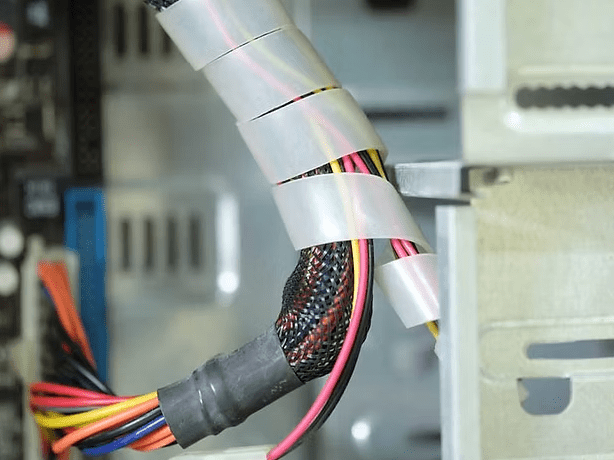
Low-voltage wiring carries 50 volts or less, unlike standard electrical wiring. It powers and connects technology systems such as networks, phones, cameras, access control, and intercoms. The main cabling options are below.
Ethernet Cable Installation
Twisted-pair copper Ethernet cables connect computers, phones, access points, and cameras to the network. The right category depends on the speed you need. All categories below are rated for up to 100 meters (328 feet) per channel unless noted.
| Cable | Max speed | Typical use today |
|---|---|---|
| Cat5e | 1 Gbps (2.5 Gbps on most runs) | Legacy installations; not recommended for new builds |
| Cat6 | 1 Gbps to 100 m; 10 Gbps to about 55 m (180 ft) | Desktops and phones in budget projects |
| Cat6A | 10 Gbps to 100 m | Recommended for new business installs, Wi-Fi 6E/7 access points, high-power PoE |
| Fiber optic | 10 to 400+ Gbps, kilometers | Backbones, between buildings, data centers |
Category 5
Original Cat5 supported up to 100 Mbps and is obsolete. Cat5e (enhanced) supports gigabit speeds and remains in many older buildings, but most organizations replace it during renovations.
Category 6
Cat6 supports 10 Gbps only up to about 55 meters, and gigabit up to 100 meters. Cat6A extends 10 Gbps to the full 100 meters and handles the heat of high-power Power over Ethernet (IEEE 802.3bt, up to 90 watts at the switch) better, which is why it is the common choice for new projects.

Fiber Optic Installation
For the highest speeds and longest distances, fiber is the best choice. Fiber cables use glass strands that carry data as light, immune to electrical interference. Multimode fiber is typical inside buildings and campuses; single-mode fiber covers longer distances and the highest future speeds.

Low Voltage Wiring for Voice and Data Transfer
Modern VoIP phones use the same Ethernet cabling as data, often powered by PoE, so one cable per desk can serve both. Your network cabling provider installs and certifies voice and data drops to every office, cubicle, and conference room.
Structured Cabling for Security Systems
IP cameras, access control panels, and readers connect over structured cabling, with PoE powering most cameras from the network switch. Cat6 or Cat6A is standard, with fiber for long outdoor runs.
Low Voltage Cabling for Intercoms
An intercom allows voice and video communication within buildings and at entrances. IP intercoms use Cat6 or Cat6A cabling and integrate with access control so staff can see and admit visitors remotely.
When Should You Look for Network Cabling Services?
Structured cabling is a specialized trade. Some electrical contractors have low-voltage teams, but most organizations hire a specialized installer that keeps up with standards, testing, and certification. Common triggers include:
- New construction, tenant improvements, or office moves
- Wi-Fi upgrades that need new access point drops or Cat6A
- Camera and access control projects
- Recurring network problems traced to old or untested cabling
- Telecom rooms that have become unmanageable
Low-voltage installation typically happens alongside or shortly after the rough electrical work, so involve your cabling partner early in construction planning.
What Organizations Need Network Cabling Services?
Every organization with a network does. Healthcare facilities, manufacturers, distribution centers, schools, government agencies, and multi-site offices benefit most because they depend on many connected devices across large or multiple buildings.
The Benefits of Structured Cabling Services
Reduced Downtime
Disorganized cabling makes errors hard to find and fix. An organized, labeled, and certified system speeds troubleshooting and improves reliability.

A Future-Proof Environment
Structured cabling lets you add, remove, or change equipment without rewiring. Choosing Cat6A and adequate fiber now supports the next generation of Wi-Fi and PoE devices.
Time Savings
No more hours spent tracing unlabeled cables. Documentation and labeling simplify moves, upgrades, and support calls.
Support Multiple Sites and Applications
Standardizing cabling across locations simplifies support and makes it easier to roll out the same network, phone, and security systems everywhere. It pairs naturally with a well-planned network; see our guide to network design.
BTI: The Network Cabling Services Provider Near Me
BTI Communications Group has been in business for 40 years, designing and installing structured cabling for small businesses and enterprise organizations. We handle design, installation, certification testing, and documentation, and our network installation in Los Angeles team can deploy the switches, Wi-Fi, and Cisco Meraki networks that run on it. To keep the system healthy after installation, see our guide to IT maintenance services.
Frequently Asked Questions
What is structured cabling?
A standards-based system of copper and fiber cables, patch panels, and pathways that connects network, phone, Wi-Fi, and security devices through organized telecom rooms, built to ANSI/TIA-568 and ISO/IEC 11801.
What are the 6 subsystems of structured cabling?
Entrance facilities, equipment room, backbone cabling, telecommunications rooms and enclosures, horizontal cabling, and work area components.
Should I install Cat6 or Cat6A?
Cat6A is recommended for most new business installations because it supports 10 Gbps to 100 meters and handles high-power PoE for Wi-Fi 6E/7 access points and cameras. Cat6 only supports 10 Gbps to about 55 meters.
What is the maximum length of an Ethernet cable run?
100 meters (328 feet) per channel: 90 meters of permanent horizontal cable plus up to 10 meters of patch cords.
Get a free IT and cyber risk assessment
See where your network, backups, and security controls stand today. BTI delivers an itemized findings report with prioritized fixes and fixed-cost options. Call 323-510-8002 or request your assessment online.