To calculate video surveillance ROI, add up the system’s total cost of ownership, estimate the annual losses and costs it avoids, then use ROI = (total benefits − total cost) ÷ total cost × 100 over the system’s life, usually five to seven years. Also calculate the payback period (total upfront cost ÷ annual net benefit). A well-designed system often pays back through reduced theft and liability claims, lower guard costs, and remote management.
This guide walks through what ROI means for a camera system, a step-by-step calculation with a worked example, the benefits that are hard to quantify, and how to improve your return.
How to Calculate ROI for Your Video Surveillance System
Most organizations treat video security as a necessary cost. Designed correctly, though, business security systems do more than record incidents: they reduce losses, lower operating costs, support compliance, and give managers visibility across every site. Calculating ROI before you buy helps you justify the investment, choose the right design, and measure results after installation.
What Is ROI and Why Is It Important?
Return on investment (ROI) measures the net benefit of an investment relative to its cost. Calculating ROI lets you compare a camera project with other uses of capital, set expectations with finance, and decide which features are worth paying for. For security, ROI comes mostly from losses and costs avoided rather than new revenue.
It also helps to know what cameras realistically achieve. A 40-year meta-analysis of 76 CCTV studies found cameras were associated with about a 13% crime reduction overall and about 37% in parking lots, with larger effects when cameras were actively monitored and combined with other measures such as lighting and access control (Piza et al., Criminology & Public Policy, 2019). Use conservative assumptions in your ROI model.
How to Calculate the ROI for Your Video Surveillance System
Step 1: Determine the Total Cost of Your System
Calculate total cost of ownership (TCO) over the system’s expected life:
- Upfront: cameras, recorders or cloud storage, network switches and PoE, cabling, installation, and configuration
- Licensing: VMS or cloud camera licenses, per camera and per year
- Ongoing: maintenance, monitoring services, storage, and support
- Internal time: staff hours to review footage and manage users
Step 2: Determine the Annual Savings from the System
Estimate the annual dollar value of benefits, using your own incident and cost history:
- Reduction in theft or vandalism: average annual losses × expected reduction
- Reduction in insurance premiums: ask your carrier about discounts for monitored systems
- Reduction in security personnel: guard hours replaced by remote video monitoring or patrol optimization
- Fewer false liability claims: slip-and-fall and workers’ compensation disputes resolved with footage
- Increased productivity: less travel for multi-site managers, faster investigations
Step 3: Calculate the ROI
Use these formulas over the analysis period:
- ROI (%) = (total benefits − total cost) ÷ total cost × 100
- Payback period (years) = upfront cost ÷ (annual benefits − annual recurring costs)
Worked example (illustrative numbers): a distribution center installs a 24-camera system for $36,000 upfront, with $4,000 per year in licenses and support. It expects $9,000 per year in avoided theft and damage, $6,000 in reduced guard hours, and $3,000 in avoided claims, for $18,000 in annual benefits.
| Item | 5-year total |
|---|---|
| Total cost ($36,000 + 5 × $4,000) | $56,000 |
| Total benefits (5 × $18,000) | $90,000 |
| Net benefit | $34,000 |
| ROI ($34,000 ÷ $56,000) | 61% |
| Payback ($36,000 ÷ $14,000 per year) | About 2.6 years |
Run the model with low, expected, and high benefit estimates so decision makers see the range.
Consider Intangible Benefits
Some benefits are hard to price but matter. When you integrate cameras with access control or add analytics, video surveillance delivers operational value such as:
- Remote monitoring of multiple locations from one dashboard
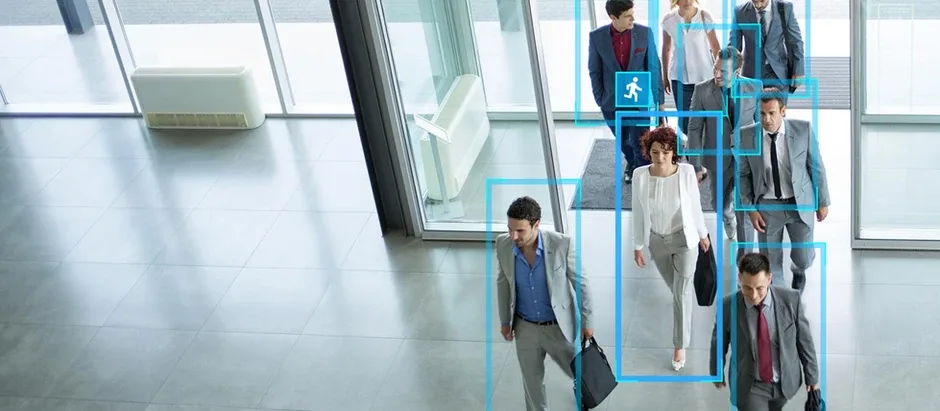
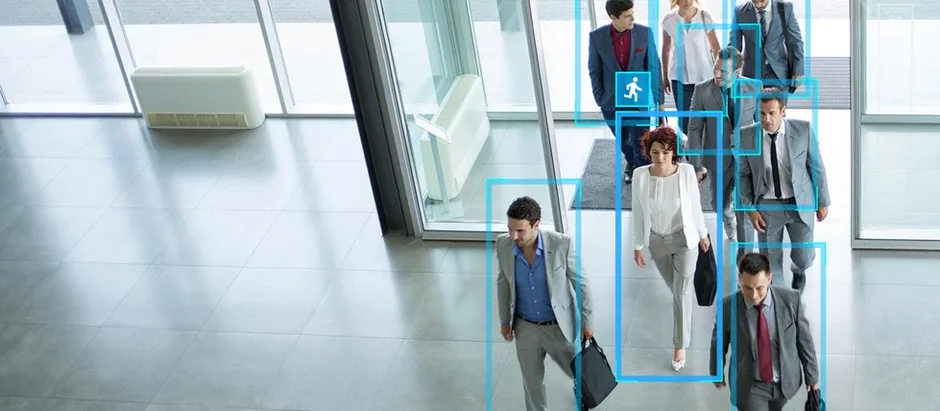
- AI analytics for occupancy, loitering, and traffic patterns that improve operations
- Faster incident investigations, with clips shared securely with police or insurers
- Employee safety and a stronger sense of security for staff and visitors
- Evidence for compliance and audit requirements
See how video surveillance boosts ROI across operations.
How to Improve Your Video Surveillance ROI
- Design for the risk: place cameras where losses happen (docks, lots, entrances, cash and inventory areas) instead of maximizing camera count.
- Choose the right platform: cloud-managed cameras such as Cisco Meraki MV cameras cut recorder hardware and on-site IT time; on-premises VMS can be cheaper at large scale.
- Add active monitoring and integration: research shows monitored, integrated systems outperform passive ones.
- Maintain the system: dirty lenses, failed drives, and outdated firmware erode value. Follow a surveillance system maintenance schedule.
- Measure after install: track incidents, losses, guard hours, and claims for 12 months and compare with your baseline.
BTI the Business Video Surveillance Provider Near Me
Calculating ROI justifies the investment, points to the design choices that matter, and gives you a baseline to measure results. BTI Communications Group has been in business for 40 years and has delivered integrated physical security since the 2010s. We design, install, maintain, and monitor video surveillance systems, and we can build an ROI model for your site using your incident and cost data.
Frequently Asked Questions
How do you calculate ROI on a security camera system?
Add up total cost of ownership over the system’s life, estimate annual benefits such as avoided losses, reduced guard hours, and fewer claims, then use ROI = (total benefits − total cost) ÷ total cost × 100.
What is a typical payback period for video surveillance?
It depends on your losses and costs. Divide the upfront cost by the annual net benefit; in our illustrative example, a $36,000 system with $14,000 in annual net benefits pays back in about 2.6 years.
Do security cameras actually reduce crime?
Yes, modestly. A 2019 meta-analysis of 76 studies found about a 13% crime reduction overall and about 37% in parking lots, with bigger effects when cameras were actively monitored.
What costs should be included in a surveillance ROI calculation?
Cameras, recorders or cloud storage, network and cabling, installation, licenses, monitoring, maintenance, and internal staff time.
Get a free security site assessment
Talk with a BTI security engineer about your cameras, access control, and alarms. We will walk your site, document what you have, and give you an itemized plan. Call 800-435-7284 or request your assessment online.