Updated October 13, 2026 · BTI Communications Group
Running a network should be simple and affordable, and it shouldn't eat up your team's time. Cisco Meraki cloud management lets you deploy, monitor and secure Wi-Fi, switching, SD-WAN, security cameras and sensors from a single web dashboard. You don't need on-site controllers or management servers.
Meraki changed a lot between 2024 and 2026. There's an AI Assistant built into the dashboard, a unified Cisco platform that also covers Catalyst gear, Wi-Fi 7, Cisco SASE and simpler subscription licensing. This guide covers what Meraki is used for today, the 12 benefits that matter most and one product that's no longer part of the story. It also explains how BTI, a Cisco Meraki partner, designs, finances and supports Meraki networks.
What Is Meraki Cloud Management?
Meraki cloud management is a centralized, cloud-hosted service for configuring, monitoring and troubleshooting every Meraki device in your organization through the Meraki Dashboard. Each device connects securely to Meraki's cloud. Your team manages them all from a browser or the Meraki mobile app, wherever they are. That makes Meraki a good fit for multi-site businesses, schools, healthcare, retail and other organizations with a small IT staff.
What is Meraki used for? Cloud-managed Wi-Fi (MR and Cisco Wireless CW access points), switching (MS and cloud-managed Catalyst), security and SD-WAN (MX and Z teleworker gateways), cellular gateways (MG), smart cameras (MV) and environmental sensors (MT), all managed in the same dashboard.
What Happened to Meraki Systems Manager (MDM)?
Earlier versions of this article listed Meraki Systems Manager (SM), Meraki's mobile device management tool, as a benefit. That's no longer accurate:
- December 3, 2025: Cisco announced the end of sale for Meraki Systems Manager.
- June 3, 2026: Cisco stopped selling new SM licenses. Five-year terms were dropped earlier.
- June 3, 2029: SM support ends. After that date, enrolled devices keep their last configuration but can't take new changes from the dashboard.
Source: Cisco Meraki, FAQ: Meraki Systems Manager (SM) End-of-Sale and Meraki Systems Manager EOL Migration.
If you still run SM, it's supported for now, but it's time to plan a migration. BTI recommends Microsoft Intune for most organizations. Intune is built into Microsoft 365 and covers Windows, macOS, iOS/iPadOS and Android. BTI deploys and manages Intune for clients as part of our managed IT services. Your Meraki network (MX, MS, MR, MV and MT) isn't affected by the SM retirement.
The 12 Benefits of Meraki Cloud Management
1. One Dashboard for Your Whole Network, Now Including Catalyst
The Meraki Dashboard has always given you one place to manage every site. Cisco has now extended it further. Global Overview in the Meraki Dashboard shows Catalyst Center-managed networks next to your Meraki networks. Cisco Cloud Control, generally available for U.S. customers, brings Meraki, Catalyst, ThousandEyes, Secure Access and other Cisco products together with one sign-on, a single inventory and a topology view. Cloud and on-premises Cisco gear now share one operating experience. Sources: Cisco Newsroom, Nov 2025; Cisco Cloud Control overview.
2. AI Assistant and Deep Reasoning for Faster Answers
The Cisco AI Assistant sits in the top-right corner of the Meraki Dashboard. Ask it questions in plain English, like "Why is Wi-Fi slow at the Phoenix office?", and get answers, recommendations and guided troubleshooting. Deep Reasoning mode handles longer, multi-step investigations such as network audits, wireless optimization, capacity planning and security assessments. The assistant only sees the organizations and networks the admin already has permission to access. Source: AI Assistant for Networking, Meraki Documentation.
3. Insights and Troubleshooting With Just a Click
Ping, traceroute, throughput tests, cable tests and live packet captures are built into the dashboard. Your team can diagnose problems at a remote site without sending a technician. You also get visibility into devices, users and applications, so you can enforce policy and keep performance where it should be.
4. Out-of-Band Control Plane
Meraki keeps management traffic separate from user traffic. Configuration, statistics and monitoring data travel over a secure connection to Meraki's cloud. Your users' web browsing and application traffic go straight to their destination on the LAN or WAN and never pass through Meraki's cloud. If the cloud connection drops, your network keeps passing traffic.
5. Enterprise-Grade Security for the Platform and Your Admins
Meraki's cloud runs in secure, certified data centers, and customer data is replicated across independent facilities for resilience. The dashboard also includes strong admin controls:
- Two-factor authentication and SAML single sign-on
- Password policies: forced password changes, lockout after failed logins, no password reuse and login restrictions by IP address
- Idle timeout: inactive admins are logged out automatically
- Role-based administration: read-only, guest-ambassador or full access, assigned per network or organization
- Configuration change alerts and a searchable change log and login audit that shows who changed what, when and from where
- HTTPS-only access to the dashboard
New in 2025–2026: Cisco Access Manager adds identity-based access control and segmentation to the Meraki Dashboard. It's powered by Cisco ISE and delivered as SaaS, so there's no hardware to deploy. (Cisco Newsroom)
6. Secure SD-WAN With Built-In Security and ThousandEyes Visibility
Meraki MX appliances combine a next-generation firewall, Auto VPN site-to-site networking and SD-WAN in one box. With the Advanced Security license, the MX adds Snort-based IDS/IPS with Talos-curated rules, content filtering, Cisco Advanced Malware Protection and ThousandEyes agent integration, which gives you visibility into internet and SaaS paths beyond your own network. See BTI's Meraki MX dealer page. Sources: Meraki Security & SD-WAN; MX/Z licensing; Threat Protection.
7. Cisco SASE: Secure Access for Remote and Hybrid Users
Cisco SASE combines Meraki SD-WAN with Cisco Secure Access, Cisco's security service edge, to protect users at the branch, at home and on the road. If you heard about Meraki Secure Connect, Cisco is moving those customers to Secure Access, so plan new SASE projects on Secure Access. Sources: Cisco SASE Getting Started Guide; Secure Connect to Secure Access Migration Guide.
8. Wi-Fi 7, Managed From the Cloud
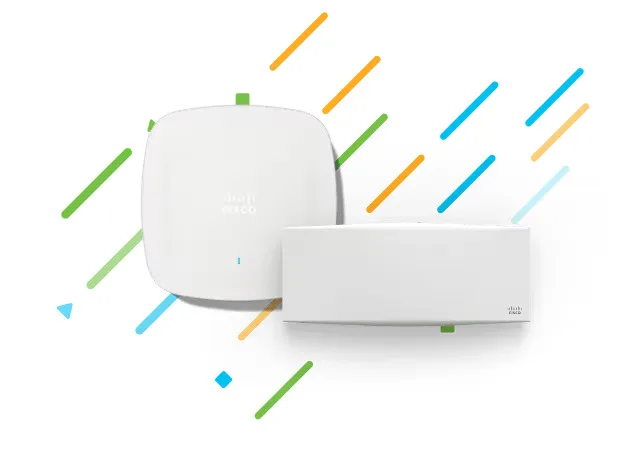
Cisco's Wi-Fi 7 access points, including the CW9172, CW9174, CW9176, CW9178 and outdoor CW9177 models, can be managed in the Meraki Dashboard. They deliver multigigabit uplinks and the 6 GHz capacity that dense offices, schools and warehouses need. Cisco's unified Wi-Fi 7 licensing also lets you choose cloud or on-premises management. Planning an upgrade? Several popular Wi-Fi 6 models (MR36, MR44, MR46) reach end of sale on December 31, 2026. See BTI's Meraki Wi-Fi installer page and commercial Wi-Fi installation. Sources: Meraki Wi-Fi; Meraki EOL Products and Dates; Subscription Licensing.
9. Cloud-Managed Switching
Meraki MS switches, including the MS130 and stackable MS150 families, plus cloud-managed Catalyst 9200/9300 "M" models, give you zero-touch deployment, port-level visibility and remote cable tests. Older MS210 and MS225 series reached end of sale on April 30, 2026, which makes this a good time to refresh. See BTI's Meraki switch dealer page. Source: Meraki EOL Products and Dates.
10. MV Smart Cameras With Cloud Analytics, No NVR Needed
Meraki MV cameras store video on the camera itself, so you don't need a network video recorder. They run machine-learning analytics at the edge, including people and vehicle detection, attribute search, motion heatmaps and occupancy counts. Optional Cloud Archive keeps 24/7 off-site backups for 7, 30, 90, 180 or 365 days. See BTI's Meraki MV camera dealer page and our Meraki security cameras overview. Sources: MV Cloud Archive; MV Presence Analytics.
11. MT Sensors for Environmental Monitoring
Meraki MT sensors watch temperature, humidity, water leaks, door status and more in server rooms, freezers and other critical spaces, and they alert your team right away. With Sensor Sight, a sensor alert shows up on the linked MV camera's video timeline, so you can see what happened. Source: Sensor Sight, Meraki Documentation.
12. Simpler, More Flexible Licensing
Meraki subscription licensing offers two feature tiers, Essentials and Advantage, with hardware-agnostic SKUs and terms from 36 to 84 months. You can pick different tiers for different networks, such as Advantage at headquarters and Essentials at branches, and you claim a license only once. Organizations already on subscriptions can trial Advantage features free for 30 days. Meraki licenses can also be part of a broader Cisco Networking Subscription. Note that the MERAKI-SUB SKU reaches end of sale on November 19, 2026, so ask BTI which subscription fits your renewal. Sources: Subscription Licensing; Licensing FAQs; Advantage Trials; Cisco Networking Subscription.
Why Choose BTI for Meraki Cloud Management
Meraki makes management simpler, but your results still depend on good design, deployment and support. BTI offers:
- Cisco Select Partner and Cisco SMB Black Belt partner
- 500+ Meraki deployments across offices, schools, healthcare, logistics and multi-site businesses
- 1-day engineer response from Cisco-certified engineers, certified at the Cisco CCNP (including legacy CCDP), CCNA and SMB Black Belt levels
- 100% financing that covers hardware, licensing and labor (why finance with BTI)
- Network design, network installation and network security services
- Microsoft Intune deployment and management for organizations moving off Meraki Systems Manager
BTI supports Meraki customers nationwide, with local teams in Los Angeles, Phoenix and Chicagoland.
Talk to a BTI Meraki engineer →
Frequently Asked Questions
What is Meraki cloud management?
Meraki cloud management is Cisco's cloud-hosted way to configure, monitor and troubleshoot Meraki Wi-Fi, switches, SD-WAN/security appliances, cameras and sensors from one web dashboard. You don't need on-site controllers or management servers.
What is Cisco Meraki used for?
Businesses use Meraki to run cloud-managed Wi-Fi, switching, firewalls and SD-WAN, teleworker and cellular gateways, smart security cameras and environmental sensors across one or many locations, all from the Meraki Dashboard.
Is Meraki Systems Manager (MDM) still available?
No new licenses are sold. Cisco announced the end of sale on December 3, 2025, and the last day to buy was June 3, 2026. Existing customers get support until June 3, 2029. BTI recommends migrating to Microsoft Intune, which BTI deploys and manages.
Does Meraki have AI features?
Yes. The Cisco AI Assistant in the Meraki Dashboard answers natural-language questions, gives recommendations and helps with troubleshooting. Its Deep Reasoning mode handles multi-step tasks like network audits and capacity planning.
Does Meraki support Wi-Fi 7?
Yes. Cisco's Wi-Fi 7 access points (CW917x family) can be managed in the Meraki Dashboard. Cisco's unified licensing also lets you choose cloud or on-premises management.
How does Meraki licensing work in 2026?
Most new deployments use subscription licensing, with Essentials or Advantage tiers, hardware-agnostic SKUs and terms from 36 to 84 months. You can mix tiers across networks. BTI can finance licensing together with hardware and labor.
Why work with a Meraki partner like BTI?
BTI is a Cisco Select Partner and Cisco SMB Black Belt partner with more than 500 Meraki deployments. Our Cisco-certified engineers hold Cisco CCNP (including legacy CCDP), CCNA and SMB Black Belt certifications. We offer 1-day engineer response and 100% financing for hardware, licensing and labor.