



Co-Managed IT Cost & Risk Comparison
Why operating model matters more than line-item price – This comparison is written
for organizations where uptime, security incidents, insurance renewals, or third-party
audits materially impact revenue or operations.

35+
Years of Proven Expertise
15+
Industries Served
10,000+
Alerts Handled, Zero Missed
98%
Client Retention Year After Year
DECISION FRAMEWORK
Every Organization Chooses One of These Three Models
Most organizations compare IT providers by evaluating monthly cost per user. However, the real difference lies in total operating cost, risk exposure, and accountability. When security, uptime, and compliance requirements become critical, organizations inevitably land in one of three operating models—whether they arrive there intentionally through strategic planning or by default through reactive decision-making.
This comprehensive analysis focuses on execution capability, coverage completeness, and risk mitigation, not marketing promises or surface-level feature comparisons. We examine three common models that mid-market organizations typically implement:
- Internal IT teams with in-house security resources
- Traditional Managed Service Providers with bolt-on cybersecurity
- BTI’s Co-Managed IT & Security Operations model
Understanding these differences is critical for IT leaders and procurement decisionmakers who must balance operational excellence with fiscal responsibility.

MODEL 1
Internal IT Team: The In-House Approach
Organizations attempting to cover IT operations, security, and compliance entirely through internal resources face significant challenges in today’s complex threat landscape. This model requires substantial investment in both personnel and technology infrastructure.

Required Personnel
- Senior IT engineers with infrastructure expertise
- Dedicated security specialists and analysts
- Compliance and audit support personnel
- After-hours coverage or on-call rotation staff

Technology Stack
- Senior IT engineers with infrastructure expertise
- Dedicated security specialists and analysts
- Compliance and audit support personnel
- After-hours coverage or on-call rotation staff

Hidden Reality of Internal IT
The internal IT model creates significant operational gaps that rarely appear in budget projections. Coverage gaps outside standard business hours expose organizations to extended response times during critical incidents. Key-person risk and burnout become inevitable as small teams struggle with 24/7 responsibilities. Tool sprawl occurs without consistent execution frameworks, leading to fragmented visibility. Perhaps most concerning, audit preparation becomes a manual, reactive scramble rather than a continuous process, increasing compliance risk and consuming valuable resources during critical evaluation periods.
Internal IT: Annual Cost Structure
For a mid-market organization supporting 50–150 users, the true cost of maintaining an internal IT and security function extends well beyond base salaries. When factoring in benefits, training, tools, and coverage requirements, the investment becomes substantial.
$140K
IT Engineers
$120K–$160K each (typically
need 2-3 for coverage)
$60K
Security Tools
$40K–$80K for SIEM, MDR, RMM,
and backup platforms
$160K
Security Specialist
$140K–$180K annually for
dedicated security expertise
$45K
After-Hours Coverage
$30K–$60K for on-call rotations
or emergency consultants
$80K
Compliance Support
$60K–$100K for audit and
framework management
$485K
Total Annual Investment
Estimated range: $390K–$580K+
before benefits and overhead
MODEL 2
Traditional MSP with Bolted-On Cybersecurity
Organizations attempting to cover IT operations, security, and compliance entirely through internal resources face significant challenges in today’s complex threat landscape. This model requires substantial investment in both personnel and technology infrastructure.
What This Model Delivers
IT support is outsourced to a Managed Service Provider while security and compliance functions are layered on through separate vendors. This fragmented approach has become increasingly common as organizations attempt to address cybersecurity requirements without fundamentally restructuring their IT operations.
- MSP handles help desk tickets and basic monitoring
- Third-party vendors provide MDR and SIEM services
- Penetration testing from specialized consultants
- Compliance managed by separate advisory firms
- Incident response coordinated across multiple parties
Critical Gaps
The bolt-on approach creates operational friction that becomes most apparent during security incidents and audit cycles. No single entity owns outcomes—each vendor manages their specific scope while organizational risk falls through the cracks between providers.
- Finger-pointing during incidents delays response
- Fragmented reporting obscures security posture
- Audit readiness assembled reactively after the fact
- Integration gaps between security tools and IT systems
- Unclear escalation paths during critical events
“The challenge isn’t finding vendors who can provide individual services—it’s finding an operating model where someone is accountable for the outcome.”
Traditional MSP + Cyber: Annual Cost Structure
The multi-vendor approach appears modular and flexible, but costs accumulate quickly as organizations layer security capabilities onto basic
managed services. Mid-market organizations typically encounter the following cost structure:
MSP Base: $180 –
260/user/month
Help desk, basic monitoring, patch management, and standard infrastructure support.
Security Layers: $100 – $180/user/month
MDR, endpoint protection, SIEM, log
correlation, and threat intelligence feeds
Testing & Compliance: $20K – $50K annually
Penetration testing, vulnerability assessments, and compliance advisory services
Estimated annual total: $300K–$480K for a 100-user organization. This figure excludes internal coordination costs, project management overhead, and the hidden expense of managing multiple vendor relationships and disparate reporting systems.
☼ MODEL 3
BTI Co-Managed IT & Security Operations
This model removes the operational burden that causes internal teams to become reactive while preserving strategic control. BTI provides a full execution layer that operates your security and IT infrastructure. Your internal IT team retains strategic control and organizational context. This comanaged model fundamentally differs from traditional outsourcing by maintaining your team’s leadership role while eliminating execution gaps.
Rather than replacing your IT leadership or fragmenting operations across multiple vendors, BTI becomes your organization’s operational engine. Your internal team focuses on strategic initiatives, vendor management, and business alignment while BTI handles 24/7 execution, monitoring, incident command during security events, coordinating response, documentation, and escalation while your IT team focuses on business and compliance work that typically overwhelms small IT departments.


Your Team Retains
Strategic direction, vendor relationships, business context, policy decisions, and organizational leadership.

BTI Executes
NOC operations, SOC monitoring,
compliance documentation, after-hours response, and continuous security operations.

Unified Outcome
Single accountability for security posture, compliance readiness, and operational reliability.
What BTI Includes By Design
Unlike traditional MSPs that charge separately for each security capability, BTI’s co-managed model includes comprehensive coverage as an integrated operational framework. Every component works together under unified management and reporting.
24/7 NOC & SOC Operations
Continuous network and security monitoring with immediate response to alerts, anomalies, and incidents across your entire infrastructure
SIEM Correlation & Response
Enterprise-grade log aggregation, correlation rules, threat hunting, and documented incident response procedures
RMM-as-a-Service
Active remediation of configuration drift, patch management, and infrastructure health with automated documentation
MDR Endpoint Protection
Managed detection and response across all endpoints with behavioral analysis and threat containment capabilities
Quarterly Penetration Testing
Regular offensive security assessments conducted by certified professionals with detailed remediation guidance
Continuous Compliance Monitoring
Real-time control validation mapped to your required frameworks with automated evidence collection and gap analysis
This integrated approach eliminates vendor coordination overhead, reduces security gaps, and provides the single-pane visibility that auditors, insurers, and executives require. All services are delivered under one operating agreement with unified SLAs and clear accountability.
BTI Co-Managed IT: Annual Cost Structure
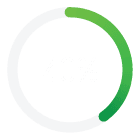
Lower Cost
Compared to internal teams
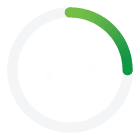
Cost Reduction
Versus multi-vendor MSP models

Coverage
Security, compliance, and operations unified
BTI’s transparent per-user pricing model aligns cost directly to infrastructure scope and complexity. Unlike fragmented multi-vendor approaches, our unified pricing includes security operations, compliance execution, enterprise-grade tooling, and specialized personnel—without requiring you to expand internal headcount.
For a typical 100-user mid-market organization with standard infrastructure complexity, the annual investment ranges from $220K to $360K. Actual pricing varies based on infrastructure complexity, regulatory scope, and device mix. Figures shown represent typical mid-market environments. Comprehensive coverage includes:
- 24/7 NOC and SOC operations with immediate response
- Shared PSA, security, and operational dashboards, and ticketing view
- All security tooling (SIEM, MDR, RMM, vulnerability management)
- Quarterly penetration testing and continuous compliance monitoring
- Dedicated security analysts and infrastructure engineers
- Project execution and after-hours implementation support
- Executive reporting and audit readiness documentation
Cost efficiency through consolidation: BTI delivers lower total cost by eliminating redundant tools, reducing vendor management overhead, and providing specialized expertise that would require multiple full-time hires. Organizations redirect internal IT resources toward strategic initiatives rather than operational firefighting.
Cost Is Only Half the Equation
Comparing IT operating models solely on annual cost misses the critical dimension of risk exposure and operational capability. The model that appears least expensive often carries the highest hidden risk—gaps that become visible only during security incidents, audit failures, or insurance renewals.
| Capability | Internal IT | Traditional MSP | BTI Co-Managed |
|---|---|---|---|
| 24/7 Security Operations | Limited or on-call only | Fragmented across vendors | ✓ Fully integrated |
| Incident Ownership | Internal team only | Unclear between vendors | ✓ Single accountability |
| Compliance Evidence | Manual collection | Assembled from multiple sources | ✓ Continuous automated |
| Penetration Testing | Periodic external consultant | Separate vendor, separate cost | ✓ Quarterly included |
| Audit Readiness | Reactive preparation | Coordinated across vendors | ✓ Always audit-ready |
| Personnel Licensing | Varies by hire | Not typically required | ✓ ACE & contractor licensed |
| Insurance Alignment | Self-documented | Gaps between providers | ✓ Pre-validated controls |
Key finding: BTI is the only model that provides single-operator accountability across all operational, security, and compliance dimensions. When incidents occur, when auditors arrive, or when insurance underwriters evaluate your posture, there’s one team responsible for documented outcomes—not multiple vendors pointing at each other.
When BTI's Model Makes Financial Sense
BTI’s co-managed IT and security operations model delivers optimal value in specific organizational contexts where operational risk and compliance requirements justify comprehensive coverage. Understanding when this model provides the best risk-adjusted return helps procurement decision-makers evaluate fit.
Eligible to Operate Where Others Are Not
BTI personnel and operations meet regulatory and contractual requirements that traditional MSPs cannot satisfy.
BTI Certifications
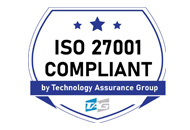

Certifications via Third-Party Data Centers & Service Providers



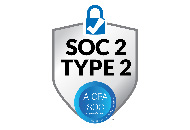






BTI Certifications
Certifications via Third-Party Data Centers & Service Providers
Why Organizations Choose BTI
Organizations operating in regulated or converged environments choose BTI for infrastructure-led execution that reduces risk and
operational burden.
Infrastructure-led execution

Continuous compliance proof

Converged IT, cyber, VoIP, and physical security

Transparent, itemized costs and management visibility
Related IT Services



Related Artics

Key Takeaways ✔ Co-managed IT reduces internal IT burnout by shifting operational execution to

Most IT organizations do not fail because they lack technology. They fail because their

Many organizations believe they are running a hybrid IT model some internal staff, some

Most audit failures do not happen because organizations lack security tools. They happen because
Ready to Reduce IT Risk and Operational Burden?
We’ll help you assess infrastructure gaps, compliance readiness, and whether BTI can support your environment long-term.