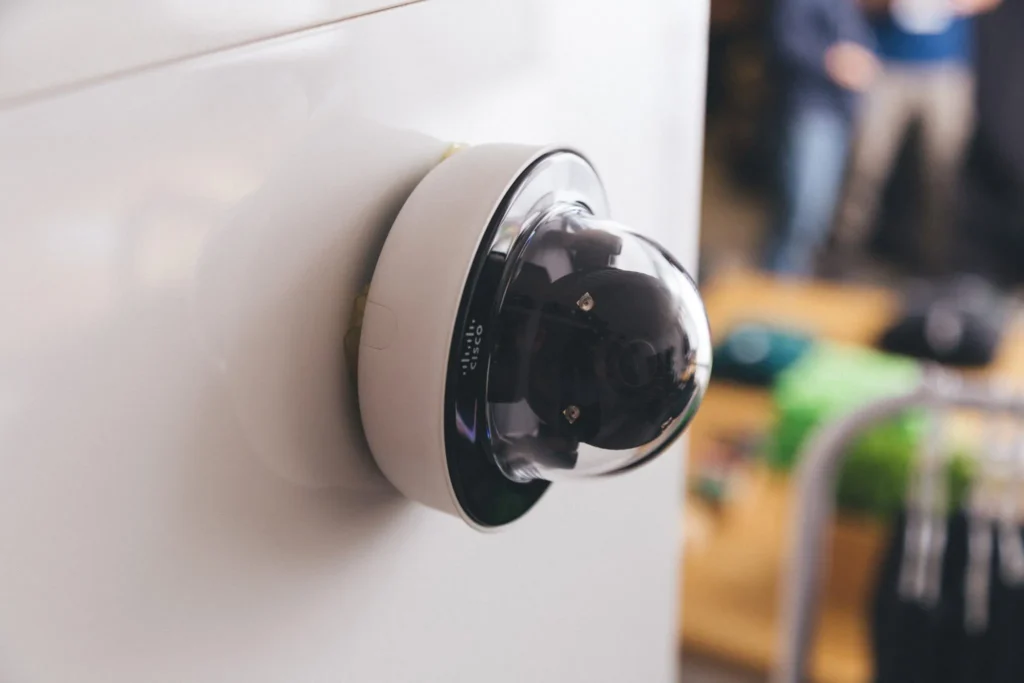




Tools don’t pass audits. Controls do.
And controls only exist when they are operating, enforced, and provable.
Most organizations believe they have a security problem.
In reality, they have a control execution problem.
They own the tools.
They pay the licenses.
They check the boxes.
And yet, when auditors, insurers, or customers ask for proof everything falls apart.
This is where the difference between tools and controls matters.
The Common (and Costly) Misconception
Security tools are marketed as outcomes:
- “EDR protection”
- “SIEM visibility”
- “Vulnerability management”
- “Compliance automation”
But tools do not create security.
They only create potential.
Without configuration, monitoring, response, remediation, and documentation, tools are just expensive dashboards that everyone eventually ignores.
This is why so many organizations:
- Own dozens of security products
- Still fail audits
- Still miss breaches
- Still lose cyber insurance coverage
What a Tool Actually Is
A tool is software or hardware that can support a control if it is correctly used.
Examples:
- An EDR agent
- A SIEM platform
- A vulnerability scanner
- A policy management system
Tools generate signals. They do not create outcomes.
What a Control Actually Is
A control is a repeatable, enforced, and auditable action that reduces risk.
A control must be:
- Configured correctly
- Operating continuously
- Monitored
- Acted on
- Documented with evidence
If any one of those is missing, the control does not exist even if the tool does. Auditors, insurers, and regulators understand this distinction very well.
Example: Vulnerability Management
Tool mindset:
“We have a vulnerability scanner.”
Control reality:
- Scan runs on a defined schedule
- Results are reviewed
- Risk is prioritized
- Patches or mitigations are applied
- Exceptions are approved and documented
- Closure is verified
- Evidence is retained
If patches are never applied — there is no vulnerability management control.
Example: SIEM and SOC Monitoring
Tool mindset:
“We have a SIEM.”
Control reality:
- Logs are properly ingested and normalized
- Alerts are tuned and actionable
- Someone is watching 24/7
- Incidents are investigated
- Response actions are taken
- Incidents are documented
- Lessons learned are applied
A SIEM with no active SOC is not a security control. It is a reporting tool.
Why Organizations End Up Ignoring Their Tools
This failure pattern is extremely common:
- Tools are purchased under pressure (audit, insurance, breach)
- Initial setup is rushed or incomplete
- Internal IT is already overloaded
- Alerts become noisy or meaningless
- Nothing happens unless something breaks
- Dashboards are ignored
- Audits expose the gap
The organization doesn’t fail because it chose bad tools. It fails because tool operation is not a core competency.
Why Control Execution Is a Core Competency at BTI
In BTI’s co-managed IT and security model:
- Providing, configuring, and operating the tools is part of the service
- Monitoring and remediation are owned, not advisory
- Controls are mapped, enforced, and validated continuously
- Evidence is collected automatically, not retroactively
- Responsibility is documented and audit-ready
Tools are not sold as features. They are treated as infrastructure for control execution.
Where Galactic Watch Fits
Galactic Watch is not “compliance software.”
It is the control validation layer that:
- Maps controls to frameworks (HIPAA, NIST, ISO, SOC 2, CMMC)
- Tracks control operation over time
- Collects acceptance, exceptions, and evidence
- Supports penetration testing and independent validation
- Produces defensible audit artifacts
Without execution, even the best GRC platform fails. With execution, it becomes proof.
Tools Without Controls Increase Risk
This is the uncomfortable truth:
- Owning tools without operating controls often increases risk, because:
- Leadership believes risk is reduced when it is not
- Auditors expect evidence that cannot be produced
- Insurers deny claims based on control failure
- Breaches expose gaps everyone assumed were covered
False confidence is worse than known exposure.
The Real Question Organizations Should Ask
Not:
“What security tools do we have?”
But:
“Which controls are operating today, who owns them, and where is the evidence?”
If that question cannot be answered clearly, the organization is not secure — regardless of spend.
How This Connects to Co-Managed IT
In a proper co-managed IT model:
- Internal IT retains business and application ownership
- A specialized partner owns control execution
- Tools are operated, not just licensed
- Controls are continuously enforced
- Proof exists before anyone asks for it
This is how organizations move from tool sprawl to defensible security.
Still Relying on Tools Instead of Proven Controls?
BTI helps organizations turn security tools into fully operated, audit-ready controls with continuous monitoring, enforcement, and documented proof.