



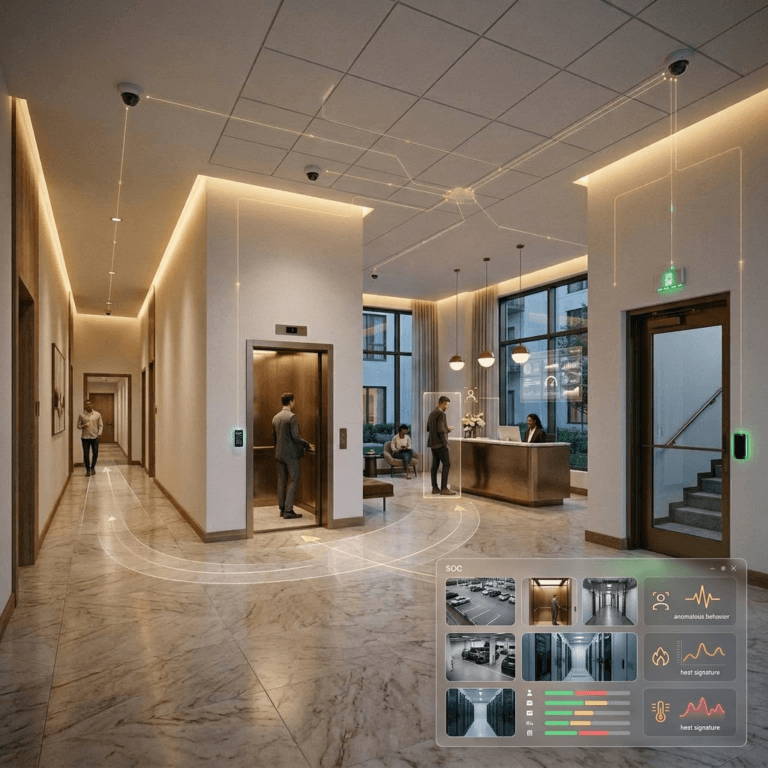
Brivo & Eagle Eye Networks: Open Cloud Security, AI, and Integration Expansion After ISC West 2026
The cloud security market is evolving quickly—but not all platforms are moving in the same direction.
At ISC West 2026, Brivo and Eagle Eye Networks reinforced a clear trend:
Cloud security platforms are evolving toward open, integrated, and AI-driven ecosystems
With continued alignment between Brivo (access control) and Eagle Eye Networks (video surveillance), the companies are positioning themselves as a connected cloud platform that extends beyond traditional security into identity, operations, and automation.
This reflects a broader industry shift toward converged security models, where systems are expected to integrate across environments rather than operate independently.
Ownership and Strategic Direction: Founder-Led with Deep Cybersecurity Roots
Brivo is a privately held, founder-led company led by Dean Drako, who also founded and leads Eagle Eye Networks.
Drako previously co-founded Barracuda Networks, a cybersecurity and data protection company, which provides important context for how both platforms are evolving.
Today, Brivo and Eagle Eye are developed under shared leadership with a focus on aligning:
Cloud-based access control
Cloud video surveillance
AI, data, and analytics
This structure supports:
Long-term platform development
Alignment between physical security and cybersecurity principles
Consistent direction across access, video, and AI systems
A Long-Term Cloud Strategy: Experience That Predates the Current Market Shift
One of the defining advantages of Brivo and Eagle Eye is how long they have operated in the cloud security space.
Before cloud became a dominant industry trend, both platforms were already:
Built as cloud-native systems
Designed for remote management and multi-site environments
Structured for distributed deployments
Many platforms entering the market today are:
Legacy systems adapted to cloud
Hybrid platforms evolving from on-premise roots
Newer entrants still maturing their capabilities
Brivo and Eagle Eye have had years to refine their platforms, resulting in a mature cloud architecture, global distribution, and strong integrator support world-wide.
Early Cloud Leadership: Shaping the Market Before Closed Platforms Emerged
Brivo and Eagle Eye were also among the early contributors to the development of cloud-based security categories.
At a time when most systems were still on-premise, they were already delivering:
Cloud-managed access control
Video surveillance as a service (VSaaS)
Multi-tenant platforms for distributed environments
This early adoption led to:
Broad deployment in commercial and multifamily environments
Real-world operational experience across diverse use cases
Platform evolution informed by long-term usage—not just design assumptions
As newer cloud platforms entered the market, many adopted more vertically integrated approaches.
In contrast, Brivo and Eagle Eye evolved with an emphasis on:
Flexibility
Integration
Deployment adaptability
ISC West 2026: Security Platforms Are Becoming Integration Platforms
A key theme at ISC West was the transformation of security systems into integration platforms.
Brivo and Eagle Eye are increasingly positioned to:
Connect access control, video, and intrusion systems
Integrate with SaaS platforms and business applications
Enable AI-driven workflows across systems
Provide centralized visibility across locations
This reflects a shift from standalone systems to connected operational ecosystems.
Brivo Access Control: Cloud Identity with Integration Flexibility
Brivo continues to be widely used in:
Multi-site portfolios
Its capabilities extend beyond access control into broader identity integration, including:
Property and tenant systems
HR and identity platforms
Visitor management tools
Workplace and operational applications
In addition, Brivo’s long standing partnership with HID positions them to immediatly capitalize on HID’s Converged Credentials for identity and zero trust cybersecurity and physical access credentials.
Platform Enhancements: Visibility, Logging, and Operational Insight
Brivo Access also received updates focused on operational transparency and system management.
Enhancements include:
- Improved visibility into data synchronization states
- Expanded logging and troubleshooting capabilities
- Better insight into system health and performance
These updates are particularly relevant for:
- Distributed environments
- Multi-site deployments
- Organizations requiring auditability and troubleshooting visibility
While less visible than AI features, these improvements are critical for:
long-term system reliability and operational control
Mercury Hardware Advantage: Seamless Takeovers and Migration
Brivo’s cloud enabled support for Mercury-based controllers enables:
Takeovers and cloud migration of expensive, predatorily supported proprietary systems such as Lenel’s without full replacement
Compatibility with existing access, SAAS, and on premise video or access control infrastructure
Phased migration to cloud environments retaining existing cabling and devices
This supports modernization strategies that avoid full system replacement and allow incremental upgrades.
Controller and Firmware Evolution
Brivo continues to evolve its controller platform, including:
- Ongoing firmware updates for ACS100, ACS300, and ACS6000 controllers
- Support for expanding cloud functionality and integrations
- Alignment with evolving security and system requirements
This reflects a steady progression of the platform’s hardware layer alongside its software and cloud capabilities.
Platform Capability and Deployment Reality
Cloud platforms simplify certain aspects of deployment, but outcomes still depend on:
System design
Configuration
Integration
Ongoing management
In practice, many systems are deployed with only partial use of available capabilities.
It is common for organizations to revisit existing deployments to improve:
Reporting and visibility
Managed alignment with cybersecurity governance and controls
Eagle Eye Networks: Open Cloud Video with Broad Integration Support
Eagle Eye Networks provides a cloud video platform designed for:
Multi-site environments
Centralized management
AI-enabled analytics
A key differentiator is its support for:
Multiple camera manufacturers
Integration with access control systems
Third-party analytics platforms
SaaS and operational system integration
Camera Flexibility: Cloud Without Forced Replacement
Eagle Eye’s cloud bridge architecture supports:
A wide range of IP cameras
Existing infrastructure reuse
Phased migration strategies
This allows organizations to:
Preserve existing investments
Introduce new technologies selectively
Avoid full replacement of camera systems
Integration with On-Prem and Hybrid Environments
Brivo and Eagle Eye can also operate within hybrid environments, integrating with:
Existing video management systems
Intrusion detection platforms
Legacy access control systems
Monitoring and response services
This enables gradual modernization and coexistence with existing infrastructure.
Alignment with HID Converged Credentials: Identity Becomes Central
HID’s introduction of converged credentials reflects a broader shift toward unified identity across:
Physical access
Digital systems
Mobile environments
Platforms like Brivo are positioned to support this shift through:
Cloud-native credential management
Integration with identity providers
Alignment with evolving access strategies
This reinforces the trend toward identity-driven security models.
AI Capabilities: From Detection to Autonomous Monitoring
Brivo’s 2026 updates place a stronger emphasis on AI as a core component of security operations.
A key development is the introduction of Eeva, Brivo’s AI video agent.
Eeva is designed to:
- Continuously monitor video environments
- Identify activity and anomalies in real time
- Generate alerts based on behavioral patterns
- Reduce reliance on manual monitoring
This represents a shift from:
AI-assisted detection → AI-assisted monitoring and decision support
In parallel, Brivo has expanded its AI ecosystem through integrations with:
- Actuate AI, focused on threat detection such as gun detection and behavioral analysis
- Cobalt AI, supporting incident management and response workflows
These integrations are designed to:
- Improve detection accuracy
- Reduce false positives
- Accelerate response times
- Enable more structured, automated workflows
Together, these capabilities move the platform closer to:
AI-driven security operations rather than passive monitoring systems
Visitor Management and Identity Workflow Expansion
Brivo also introduced enhancements to visitor management through integration with Envoy.
This expands the platform’s capabilities into:
- Visitor registration and pre-screening
- Credential issuance and access provisioning
- Integration with workplace and tenant systems
- Improved operational visibility into facility access
This reflects a broader trend of access control evolving into identity and experience management
Particularly in commercial and multifamily environments, this integration helps bridge:
- Security
- Operations
- User experience
Third-Party Ecosystem and Integration Expansion
Both platforms continue to expand integration with:
SaaS platforms
Property and workplace systems
Identity and credentialing solutions
Analytics and automation tools
This enables organizations to build systems that are:
Adaptable
Customizable
Integrated with broader business processes
Founder Alignment: Long-Term Platform Thinking and System Integration
The direction of Brivo and Eagle Eye reflects a broader shift toward long-term, integrated platform development.
This aligns with how BTI Communications Group has approached system design and deployment—focusing on:
Integration across security, IT, and infrastructure
Lifecycle performance rather than initial deployment
Adaptability as technologies evolve
This alignment supports outcomes where systems are designed to function and improve over time.
Market Direction: AI, Cloud, and Platform Choice
Brivo’s 2026 direction reflects a broader industry trend toward:
- Cloud-native platforms
- AI-driven monitoring and response
- Integrated ecosystems across security and operations
At the same time, organizations continue to evaluate different approaches depending on:
- Security requirements
- Infrastructure strategy
- Integration needs
- Operational complexity
In some cases, this includes evaluating alternative platforms or architectures for specific use cases.
This reinforces the importance of aligning platform choice with operational requirements rather than defaulting to a single model
Vendor-Neutral Design and National Deployment Considerations
Across the industry, organizations often operate with multiple systems, vendors, and legacy infrastructure.
Effective implementation requires:
Vendor-neutral evaluation of platforms
Cross-platform integration expertise
Coordination between access, video, IT, and cybersecurity systems
Deployment and support models may include:
Centralized design and engineering
National installation and rollout
Remote monitoring and support
On-site service and field operations
This approach allows organizations to maintain consistency across locations while adapting to local requirements and existing systems. Brivo has been doing all of this longer than any other cloud security vendor.
Final Takeaway: Open Cloud Platforms Are Expanding—Execution Determines Outcomes
Brivo and Eagle Eye represent an important evolution in cloud-based security:
Open, integrated platforms
AI-enabled capabilities
Flexible hardware and software ecosystems
Established presence in commercial and multifamily environments
At the same time, outcomes depend on how systems are designed, integrated, and managed over time
Next Step
Organizations evaluating cloud security platforms may benefit from:
Assessing current systems and integrations
Evaluating cloud and hybrid approaches
Planning for identity, AI, and future expansion
Ready to Evaluate or Improve Your Cloud Security Platform?
BTI Communications Group works with organizations to design, deploy, and support systems aligned with their infrastructure, operational needs, and long-term strategy.