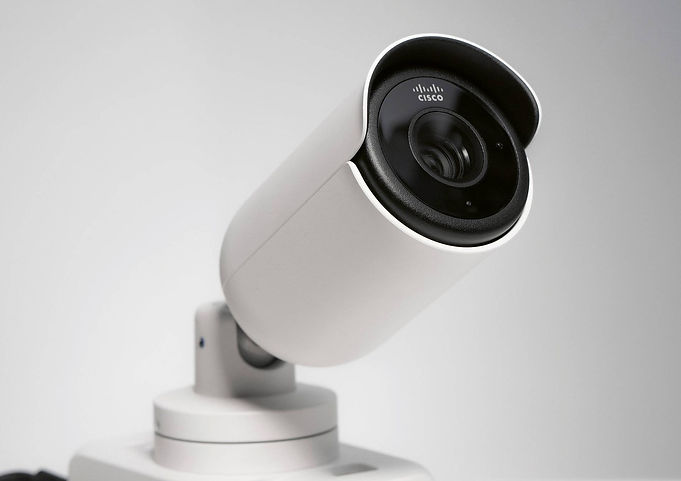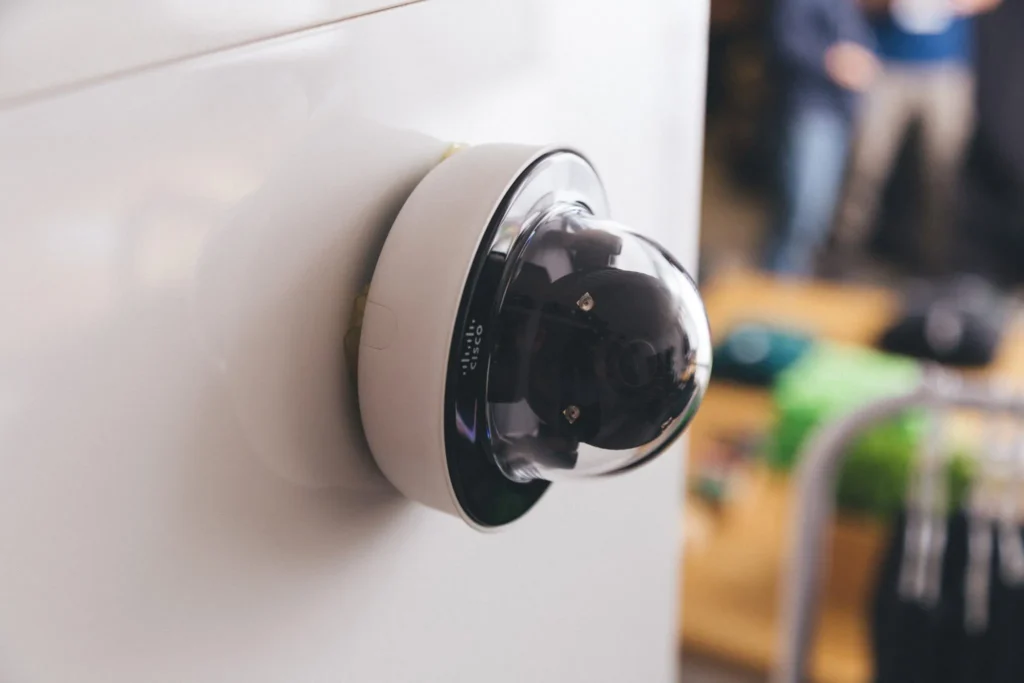



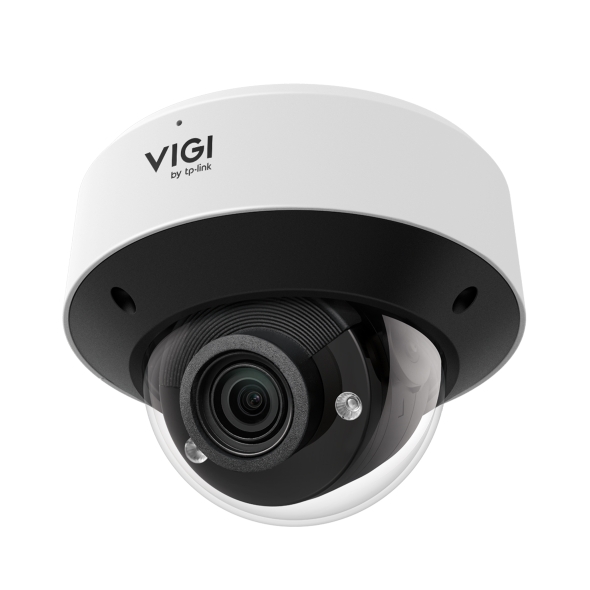
CISA issued an advisory affecting TP-Link VIGI Series IP cameras, highlighting CVE-2026-0629 and the risk of unauthorized administrative access in business CCTV environments. If your cameras share network reach with business systems, this is not “just a camera issue.” It is a convergence issue: IoT endpoints, identity controls, remote access, and monitoring all intersect here.
When executives ask, “Are we exposed?” the right answer is not a product list.
It is proof: segmentation, access enforcement, patch governance, and monitoring that includes physical security endpoints.
What Is CVE-2026-0629?
CVE-2026-0629 is an authentication bypass vulnerability affecting certain TP-Link VIGI IP cameras. It can allow an attacker on the local network (LAN) to reset a camera’s administrator password by manipulating the password recovery function in the local web interface. If exploited, this can lead to full administrative control of the device.
Admin takeover means more than viewing video. It can include configuration changes, disabling protections, creating persistence, and eroding incident evidence when video is needed most.
Is TP-Link VIGI Safe to Use?
TP-Link VIGI cameras are not inherently unsafe. The risk depends on how they’re deployed and managed. They become high-risk when cameras are placed on flat networks, exposed to the internet, connected to unsecured Wi-Fi, left unpatched, or not monitored. Proper segmentation, secure remote access, and firmware governance significantly reduce exposure.
“Is it safe?” is the wrong question. The right question is: Is it engineered and governed like an endpoint in your security program?
Why “LAN-Only” Vulnerabilities Still Matter
Many camera vulnerabilities require LAN access, but most modern attacks begin by obtaining internal footholds through phishing, credential theft, compromised endpoints, and lateral movement. Once inside, attackers scan for IoT and infrastructure devices that are poorly segmented. A camera on the wrong VLAN can become a pivot point into business systems. “Internal-only” is not a security strategy.
If your cameras sit on the same flat network as workstations, “LAN-only” effectively becomes “business-wide.”
What Should Businesses Do Right Now?
Start with risk reduction: confirm camera models and firmware status, remove any direct internet exposure, place cameras behind a firewall, enforce VPN-only remote access for administration, validate VLAN segmentation, and implement monitoring and alerting for admin changes. Patch and document changes to support audit defensibility and cyber insurance requirements.
Talk to a BTI Engineer About Your Camera Network
Fast validation of exposure paths, VLAN design, and remote access control.
How to Secure TP-Link Cameras Against CVE-2026-0629?
BTI Communications Group recommends five controls that apply to TP-Link VIGI and any commercial IP camera environment. These are the controls that reduce risk and improve defensibility during audits, investigations, and insurance reviews.
1) Segment Your Camera Network
Camera network segmentation means placing IP cameras on a dedicated VLAN or security zone that is isolated from workstations, servers, domain controllers, and VoIP systems. Only explicitly required traffic should be allowed between networks. Segmentation reduces lateral movement risk and makes camera systems easier to monitor, govern, and defend during audits.
A VLAN label is not segmentation. Network segmentation is an enforced policy. If firewall rules are permissive, the “camera VLAN” is still a flat network.
2) Deploy Your Cameras with a Disciplined Wirless Architecture
Wi-Fi cameras can be secure if they are deployed with disciplined wireless architecture. Secure Wi-Fi camera deployments require WPA3 (where supported), a dedicated IoT SSID, client isolation, firewall-enforced VLAN separation, and strong credential practices. Wi-Fi cameras on the same SSID as corporate laptops significantly increase lateral movement risk.
Wi-Fi design is part of your security posture. If roaming, segmentation, and interference are unmanaged, reliability and security both degrade.
3) Secure Remote Access: Why Cameras Should Not Be Publicly Reachable
Camera management interfaces should not be exposed directly to the internet. Best practice is VPN-based access with identity-based authentication, MFA where supported, IP restriction rules, and logging of administrative sessions. This reduces attack surface, improves accountability, and prevents “convenience remote access” from becoming a breach path.
4) Firmware Patch and Lifecycle Management
IP cameras are IoT endpoints and require lifecycle governance. A strong posture includes firmware version tracking, regular patch review cadence, end-of-life monitoring, and documented upgrade procedures. Unpatched cameras remain vulnerable long after advisories are issued, and unmanaged firmware drift creates avoidable exposure across multiple sites.
5) Monitoring and Log Visibility: Why SIEM Integration Matters
Camera access and administration logs should be centralized, correlated with identity events, and reviewed for anomalous changes. If an admin password changes unexpectedly, the organization should know immediately. This requires cybersecurity monitoring and operational oversight, not just video recording. SIEM visibility helps turn device events into actionable security outcomes.
If you cannot detect admin changes, you cannot prove control. Evidence matters.
Wired vs Wi-Fi Cameras: Which Is More Secure?
Wired cameras are generally more stable, easier to segment, and less exposed to radio-layer risks. Wi-Fi cameras can still be secure, but require stronger wireless design, dedicated IoT SSIDs, client isolation, and firewall-enforced segmentation. Security is not determined by wired vs wireless alone. It is determined by architecture, access control, patching, and monitoring.
What Is Converged Security?
Converged security is the integration of IT security, cybersecurity operations (SOC/SIEM/MDR), physical security (cameras and access control), and communications security into one unified risk surface. Instead of managing these systems separately, they are monitored, governed, and operated as one environment. This prevents physical security devices from becoming blind spots.
Converged security solutions reduces “vendor gaps” and prevents finger-pointing when incidents occur.
Why Camera Security Affects Compliance and Cyber Insurance
Modern frameworks and insurance underwriting increasingly expect provable controls such as segmentation, access enforcement, monitoring, patch management, and incident response readiness. These expectations apply to camera systems as well. If cameras are unmanaged or unmonitored, organizations can fail audit reviews or struggle to defend controls after an incident.
Bottom Line
CVE-2026-0629 is a reminder that IP cameras are network endpoints. They must be segmented, patched, access-controlled, and monitored. Camera security is cybersecurity, and Wi-Fi design is part of your security posture. Organizations that treat cameras as facilities equipment create avoidable risk. Organizations that operate under a converged security model improve resilience and audit defensibility.
Request a Camera Cybersecurity Assessment
BTI will inventory affected devices, validate exposure paths, confirm segmentation and remote access controls, and provide a prioritized remediation plan.