Most organizations still treat cameras and door systems as “facility technology.” Modern CCTV systems are IP endpoints that live on your network, share routes with business applications, and often have remote access paths that bypass the controls you enforce elsewhere.
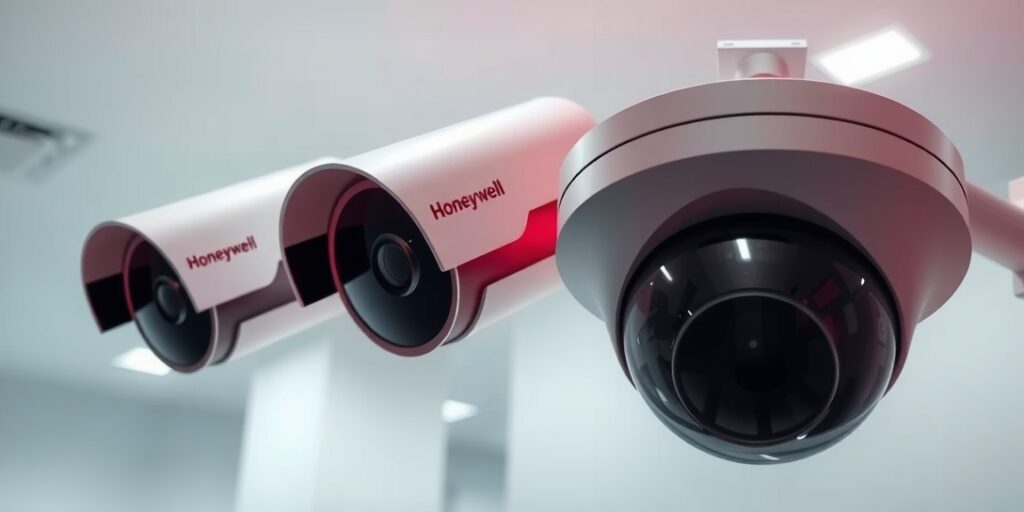
A new critical vulnerability affecting multiple Honeywell CCTV products is a reminder that physical security devices are not separate from cybersecurity risk. They are part of it.
CISA’s advisory identifies CVE-2026-1670 (CVSS 9.8), a critical weakness that can allow an unauthenticated remote attacker to take over accounts by abusing a password recovery workflow. Once an attacker owns the account, they can gain unauthorized access to camera feeds and potentially create conditions for broader compromise depending on how the environment is designed.
This is not a theoretical problem. It is a design and governance problem: how cameras are exposed, managed, segmented, monitored, and maintained.
What Happened: A Password Reset Feature Becomes an Account Takeover Path
According to CISA’s advisory and the vulnerability record, the issue is an unauthenticated API endpoint exposure tied to the “forgot password” recovery process. In practical terms, the flaw can allow an attacker to change the recovery email address without authentication, which can lead to account takeover.
CISA summarizes the business impact clearly: successful exploitation could lead to account takeovers and unauthorized access to camera feeds and could contribute to further compromise depending on the environment.
Why This Matters to Executives: This Is Not “Just a Camera Issue”
When attackers can hijack a camera account, the risk extends beyond video:
Operational visibility and incident response degrade
If your cameras are used for safety, investigations, inventory protection, or compliance evidence, losing trust in those feeds is a business event, not a technical footnote.
Physical and cyber risk converge
Camera systems often sit in the same infrastructure as identity systems, building networks, and IT management tooling. A weak device becomes a foothold when networks are flat; remote access is permissive, or monitoring is absent.
Compliance and insurance scrutiny intensifies
If your environment is audited, or if a claim depends on demonstrating reasonable controls, “we didn’t know our cameras were exposed” is not a defensible posture. Increasingly, organizations must prove segmentation, access control, patching, and monitoring across all in-scope endpoints, including IoT and security devices.
What You Should Do Now: Fast Risk Reduction Steps
CISA’s guidance is direct and aligns with what BTI recommends for commercial security systems:
1) Eliminate direct internet exposure
If cameras or camera management interfaces are accessible from the public internet, reduce exposure immediately. CISA recommends minimizing exposure and ensuring devices are not accessible from the internet.
2) Put cameras behind a firewall and require secure remote access
CISA recommends placing devices behind firewalls and using secure remote access methods such as VPNs (while keeping VPNs updated).
3) Patch and validate firmware updates
CISA’s advisory indicates Honeywell recommends contacting Honeywell support for patch information.
What BTI Adds Beyond the Basic Guidance: “Secure the Device” Is Not Enough
Most organizations will take the immediate containment steps noted above. The bigger question is whether your environment is designed so that a compromised camera stays a camera problem.
BTI’s approach is infrastructure-led and convergence-driven: we secure the cameras, but we also engineer the network and operating model around them.
1) Segmentation that is auditable, not just “a vLAN”
A separate vLAN helps, but segmentation needs policy enforcement, controlled pathways, and monitoring. Cameras should not have unfettered routes to core IT systems. Where required, traffic should be explicit, documented, and logged.
2) Identity and access control for physical security endpoints
If your camera platform ties into directory services, SSO, or centralized identity, the security posture must match the business impact. Unique accounts, least privilege, and secure admin workflows matter because “account takeover” is the entire point of this CVE.
3) Monitoring that includes IoT and physical security systems
IoT and physical security devices frequently create blind spots because they do not land in the same monitoring and alerting pipelines as endpoints and servers. If you can not detect abnormal access patterns, configuration changes, or new remote access behavior, you will learn about issues late.
4) Lifecycle management and configuration control
Security devices are long-lived by design. That is exactly why they need disciplined lifecycle management, standardized secure configurations, and patch governance. “Set it and forget it” is how critical devices remain exposed long after fixes exist.
How BTI Helps
BTI Communications Group designs, installs, and manages converged environments where IT, cybersecurity, and physical security are secured as one. That includes secure network architecture for cameras and access control, hardened remote access, lifecycle patching governance, and monitoring aligned to business risk.
If you want a quick review of your CCTV’s exposure and segmentation, request a consultation with BTI.
Is Your CCTV Environment Exposed?
A critical Honeywell CCTV vulnerability is a reminder that cameras are network endpoints. If your system has remote access, flat networks, or inconsistent patching, it may increase business risk. BTI can review your exposure, segmentation, and access controls to help reduce risk fast.
Request a CCTV Risk Review