
How to Evaluate a Managed IT Provider
For Businesses Over $25 Million in Revenue
Enterprise IT evaluation shifts from support quality to risk management, compliance, and operational resilience.

35+
Years of Proven Expertise
15+
Industries Served
10,000+
Alerts Handled, Zero Missed
98%
Client Retention Year After Year

Enterprise IT Evaluation at $25M+
For organizations over $25M in revenue, managed IT is no longer a helpdesk function. It becomes a risk management system responsible for protecting the organization’s operational integrity and regulatory standing.
At this scale, IT infrastructure decisions directly impact business continuity, regulatory compliance, cyber insurance eligibility, audit readiness, and executive liability. The stakes are fundamentally different than they are for smaller organizations.
This guide explains how enterprises should evaluate managed IT providers at scale, focusing on the capabilities that truly matter when organizational risk is at stake.
Business Continuity
Ensure resilient operations and recovery
Regulatory Alignment
Maintain compliance with applicable laws
Insurance Eligibility
Qualify for cyber and liability coverage
Audit Readiness
Demonstrate controls and evidence quickly
These four pillars represent the core areas where managed IT providers must demonstrate capability at enterprise scale.
Why Revenue Changes IT Evaluation
Scale Introduces Risk, Not Just Complexity
The $25M revenue threshold represents a fundamental shift in how organizations must approach IT management. As revenue increases, organizations face exponentially greater regulatory scrutiny, more stringent cyber insurance requirements, comprehensive vendor risk assessments, increased litigation exposure, and multi-site operational dependencies.
At this level, IT failures are business failures, not technical inconveniences. A network outage doesn’t just frustrate users—it halts revenue generation, disrupts customer commitments, and potentially triggers compliance violations. A security incident doesn’t just compromise data—it exposes the organization to regulatory penalties, insurance claim denials, and reputational damage that can take years to repair.
The evaluation criteria must reflect this reality. Organizations at this scale cannot afford to select managed IT providers based on cost per user or ticket response times alone. The evaluation must focus on the provider’s ability to prevent incidents, maintain compliance, and reduce organizational risk over time.

Why Revenue and Regulation Matter
Regulatory Pressure Increases With Scale
Privacy Regulations
CCPA, CPRA, and similar state-level privacy laws impose strict requirements around data access, logging, and consumer rights. Non-compliance carries significant financial penalties.
Industry Security Standards
HIPAA for healthcare, CMMC for defense contractors, PCI DSS for payment processing—each industry has specific security requirements that must be continuously maintained.
Cyber Insurance Controls
Insurance underwriters now require documented evidence of specific security controls, continuous monitoring, and incident response capabilities before issuing or renewing policies.
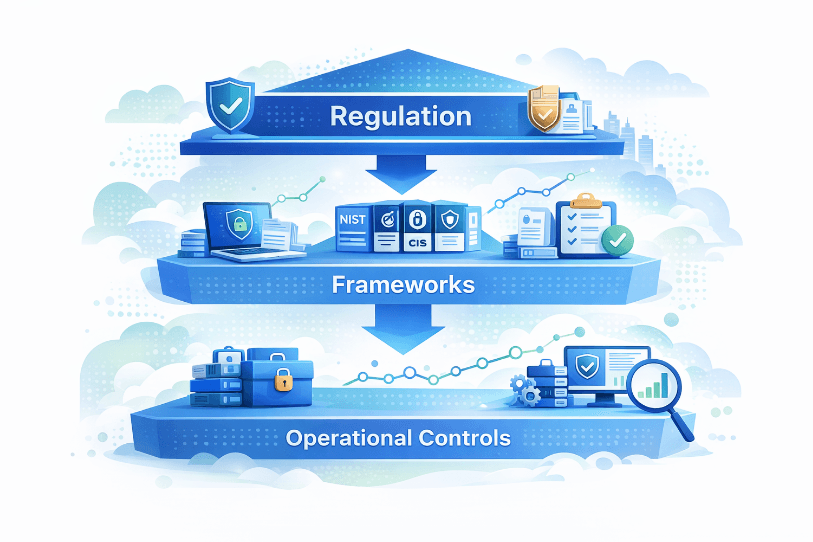
If enterprise risk is on the line, evaluate ownership, governance, documentation, validation, and risk alignment.
Why Traditional MSP Metrics Fail
SMB Evaluation Criteria Break at Enterprise Scale
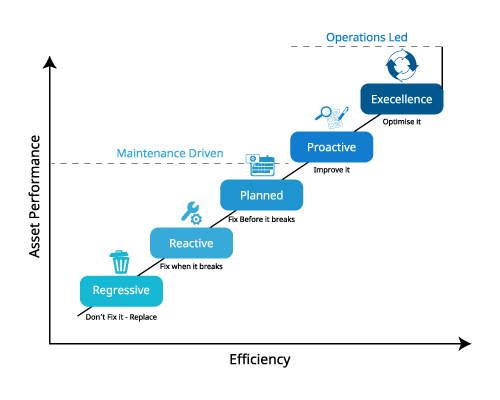
Common MSP metrics that work for small businesses become actively misleading at enterprise scale. Ticket response times, unlimited support promises, cost per user, and ticket closure volume all measure reaction, not risk prevention.
A managed service provider can have excellent ticket response times while allowing infrastructure to degrade. They can close thousands of tickets monthly while never addressing root causes. They can offer unlimited support while lacking the architectural expertise to design resilient systems.
For enterprises, these metrics create a false sense of security. They suggest active management when, in reality, the provider is simply responding to failures as they occur. The organization remains exposed to the same risks year after year because the underlying issues are never resolved.
Enterprises must evaluate outcomes, not activity. The question is not
“How quickly do you respond?” but rather “How do you prevent
incidents from occurring in the first place?”
Evaluation Criteria That Matter at Enterprise Scale
What Enterprises Must Verify
Enterprises over $25M should verify that a managed IT provider can deliver specific capabilities that directly reduce organizational risk. These capabilities represent the foundation of enterprise-grade IT management.
Proactive Risk Remediation
The provider must identify and resolve infrastructure vulnerabilities before they
cause outages or security incidents. This requires continuous monitoring, regular
assessments, and systematic
improvement processes.
Unified IT Governance
IT, cybersecurity, voice systems, and
physical security must be governed
together under consistent policies and
standards. Fragmented management
creates gaps where incidents occur.
Documented Controls
All technical and administrative controls must be formally documented, regularly
reviewed, and consistently applied across the organization. Documentation is not optional—it’s evidence of due diligence.
Audit Support
The provider must support audits, penetration testing, and evidence collection without disrupting operations.
This includes maintaining logs, producing reports, and explaining control.
Regulatory Alignment
Operations must align with regulatory requirements and cyber insurance underwriting standards. The provider should understand how their work maps
to compliance frameworks.

Cybersecurity Must Be Operational
Security Is Not Optional at $25M+
At enterprise scale, cybersecurity cannot be treated as a separate service or optional upgrade. It must be integrated into daily IT operations as a fundamental component of system management.
Organizations over $25M face sophisticated threat actors, regulatory requirements that mandate specific security controls, and cyber insurance policies that require documented security practices.
Enterprise-grade managed IT providers embed security into their standard operations. Vulnerability management, access controls, security monitoring, incident response, and evidence collection are not sold as add-ons—they are baseline capabilities that every enterprise organization requires.
Security sold as optional upgrades creates measurable risk. It signals that the provider views security as a profit center rather than a fundamental responsibility.
Compliance Requires Proof
Documentation and Evidence Are Mandatory
Regulatory compliance and cyber insurance eligibility both depend on the organization’s ability to produce evidence of implemented controls.
Policies and procedures are insufficient—auditors and insurers require proof of consistent execution.
- Documented controls
- Repeatable processes
- Time-stamped evidence
- Clear ownership
If an MSP cannot produce evidence of control implementation, the organization retains the liability.
Common Enterprise Red Flags
Indicators of Hidden Risk
Enterprises should be cautious if an MSP:
Only offers ticket-based SLAs
Sells cybersecurity as optional upgrades
Lacks a formal compliance framework
Cannot support audits or insurance reviews
Deflects responsibility during incidents
How Enterprises Should Validate an MSP
Pre-Engagement Due Diligence
Before selecting a managed IT provider, enterprises should ask:
- How do you proactively reduce infrastructure risk?
- What controls do you document and maintain?
- How do you support audits and cyber insurance reviews?
- Who owns incident response and evidence?
- How do you roadmap long-term improvement?
Clear answers indicate maturity. Vague answers indicate deferred risk.
FAQs: Managed IT for Regulated Enterprises
What type of MSP is best for regulated enterprises?
Regulated enterprises are best served by infrastructure-led managed IT providers that prioritize compliance governance, documented security controls, and proactive infrastructure risk reduction rather than ticket volume.
At what size does a business need enterprise-grade managed IT?
Most organizations require enterprise-grade managed IT once they exceed $25 million in annual revenue, operate across multiple locations, or become subject to regulatory, contractual, or cyber-insurance requirements.
Why is helpdesk-focused managed IT risky for large organizations?
Helpdesk-centric MSPs often lack governance, compliance documentation, and proactive remediation, increasing regulatory exposure and legal liability.
Why is compliance documentation important for managed IT?
Compliance documentation provides evidence that reasonable controls were in place, often required for audits, insurance claims, vendor reviews, and legal defense.
How does infrastructure-led managed IT reduce liability?
By remediating risk, enforcing controls, and maintaining audit-ready documentation, infrastructure-led managed IT reduces regulatory penalties, insurance denials, and litigation exposure.
Operating in an Enterprise IT Environment?
We’ll help you:
- Assess cross-system dependencies that create outages and security gaps
- Identify governance issues caused by fragmented tools and vendors
- Determine whether BTI can standardize and support your environment long-term